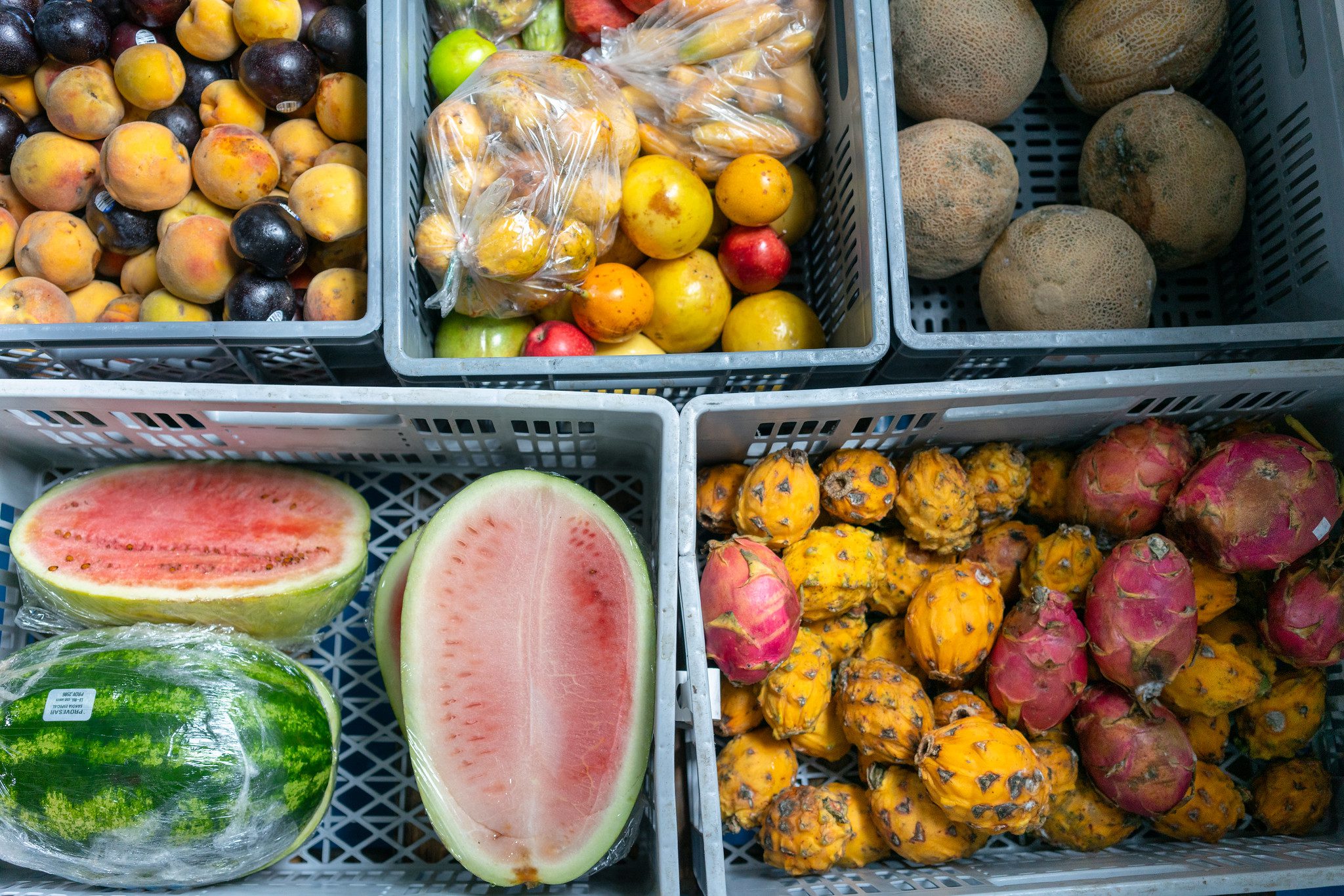
European Food Banks Launch European Pilot to Measure the Climate Impact of Food Redistribution
New initiative will generate unique European evidence on methane emissions avoided through food recovery and redistribution operations.
Brussels, 08 October 2026 – Europe’s food banks are launching a new initiative to measure how much methane emissions can be avoided by recovering and redistributing surplus food that would otherwise go to waste. The project will provide new, robust European evidence of food redistribution’s contribution to climate action, alongside its
established role in tackling food insecurity.
Led by the European Food Banks Federation (FEBA) in partnership with The Global FoodBanking Network (GFN), Food Bank Greece, Felix (United Kingdom) and FoodCloud (Ireland), the 14-month pilot is supported through a grant from the Global Methane Hub.
Every day, food banks recover surplus food that would otherwise become waste and redistribute it to charitable organisations supporting people experiencing food insecurity. By keeping that food out of the waste stream, food banks also help avoid methane emissions, a potent greenhouse gas responsible for around one-third of current global
warming.
This climate impact is particularly relevant in Europe, where the waste sector is the second-largest source of methane emissions. In 2022, the sector produced an estimated 97 million tonnes of CO₂e, around 80% of which came from waste disposal (source: EEA). Yet while the social value of food redistribution is widely recognised, its climate impact
has rarely been measured in Europe.
The pilot will address this gap by applying the FRAME (Food Recovery to Avoid Methane Emissions) methodology, developed by GFN, to quantify the methane emissions avoided through food recovery and redistribution. FRAME has already been implemented across Latin America, Africa and Asia.
This robust, comparable methodology will give food banks measurable, verifiable evidence of their climate contribution. It will also give corporate partners credible and consistent data on the destination and climate impact of donated surplus food, helping them demonstrate the environmental benefit of their contributions and support their sustainability reporting.
The evidence generated through the pilot is expected to support implementation of the EU’s Waste Framework Directive, Landfill Directive and wider Circular Economy agenda by demonstrating the environmental value of preventing edible food from becoming waste.
The pilot will begin with Food Bank Greece, which operates seven food banks across the country, redistributing more than 2,000 tonnes of food each year to over 137,000 people through a network of 350 charitable organisations. Greece generates over 2.09 million tonnes of food waste annually (source: Eurostat), making it an ideal testing ground to demonstrate how food redistribution can help address both food insecurity and methane emissions at scale. Beyond Greece, the pilot will also draw on the expertise of Felix (UK) and FoodCloud (Ireland) to help adapt the FRAME methodology to the diversity of waste management realities found across Europe, and to explore how it can be integrated into existing and emerging data systems. The lessons learned will help assess how a common European approach to measuring the climate benefits of food redistribution can be developed and scaled across the continent.
Ultimately, the project will establish a foundation for integrating environmental metrics into FEBA’s broader impact framework, reinforcing data-driven advocacy, strengthening the case for corporate partnerships and enabling food banks to increasingly contribute to European climate and waste reduction goals.
“Food banks are already climate actors. Every time they redirect surplus food from waste to people, they prevent methane emissions, yet that impact has never been properly measured in Europe. This pilot will change that, giving us data to strengthen policies and partnerships that back food redistribution, for the benefit of people and the planet.” Esteban Arriaga Miranda, CEO, FEBA
“About a third of all food produced is lost or wasted while 645 million people face hunger. Food recovery is an effective, proven way to both cut down on methane emissions while redirecting food to the people who need it most. GFN is pleased to partner with FEBA and the Global Methane Hub to demonstrate the positive environmental impact of food recovery in Europe.” Lisa Moon, President & CEO, The Global FoodBanking Network
“Evidenced environmental impact, calculated with a specific methodology, will highlight food banks’ contribution and help us further motivate stakeholders all over Europe.” Dimitris Nentas, General Manager, Food Bank Greece
“FoodCloud is delighted to collaborate with FEBA, GFN, and our food banking peers on this vital initiative supported by the Global Methane Hub. Food banking has always been about more than just moving food from A to B. This project creates a way to measure specific environmental impacts such as avoided methane emissions, which is a crucial step for our future. Our team is eager to contribute our data and technology expertise to ensure the FRAME methodology can be seamlessly adopted and scaled across the broader European network.” James Clifford, Director of Engineering, FoodCloud, Ireland
“Surplus food redistribution delivers a powerful double benefit: helping communities access good food while reducing the environmental impact of food waste. We are proud to support FEBA’s Climate Impact pilot programme, which will help develop a consistent and credible approach to measuring the greenhouse gas emissions avoided through food redistribution. By strengthening the evidence base, we can better demonstrate the vital role food banks play in tackling both food insecurity and climate change across Europe.” Gareth Batty MBE, Network Director, Felix, UK
About the European Food Banks Federation
FEBA is a Brussels-based, member-driven non-profit uniting 28 national food banks across Europe to combat food insecurity while minimizing food waste and its environmental impact. In 2025, the network redistributed more than 860,890 tonnes of food through some 42,800 charitable partners, reaching over 13 million people. Learn more at www.eurofoodbank.org.
About The Global FoodBanking Network
Food banking offers a solution to both chronic hunger and the climate crisis. GFN supports partners in more than 50 countries to redirect surplus, healthy food to those who need it. In 2025, our network provided food to more than 40 million people. We help the food system function as it should: nourishing people and the planet together. Learn more at foodbanking.org.