Originally published on July 9, 2025. Updated on July 28, 2026.
Food banks around the world address hunger and bolster their communities by recovering food that would otherwise go to waste and redirecting that food to feed people facing hunger — while preventing methane emissions from food loss and waste at the same time.
Food banks have faced multiple barriers to their work over the last several years — disasters, conflict, high food prices, supply chain disruptions and cuts in overseas humanitarian assistance. And these same issues cause a surge in demand for food bank services. But despite the myriad challenges, food banks are rising to the occasion.
Ever agile, responsive and resilient, food banks serve as safety nets around the world, connecting local communities to nutritious food, despite the challenges that food bankers face.
The GFN Spotlight draws on 2025 data we collected from 55 food banking organizations in our network across 47 countries. It provides a look at developments and innovations in food banking, highlights members’ achievements, and demonstrates the ways that food bankers are responding to the omni-present disruptions and challenges in the world.
Here are a few of the takeaways from the data.
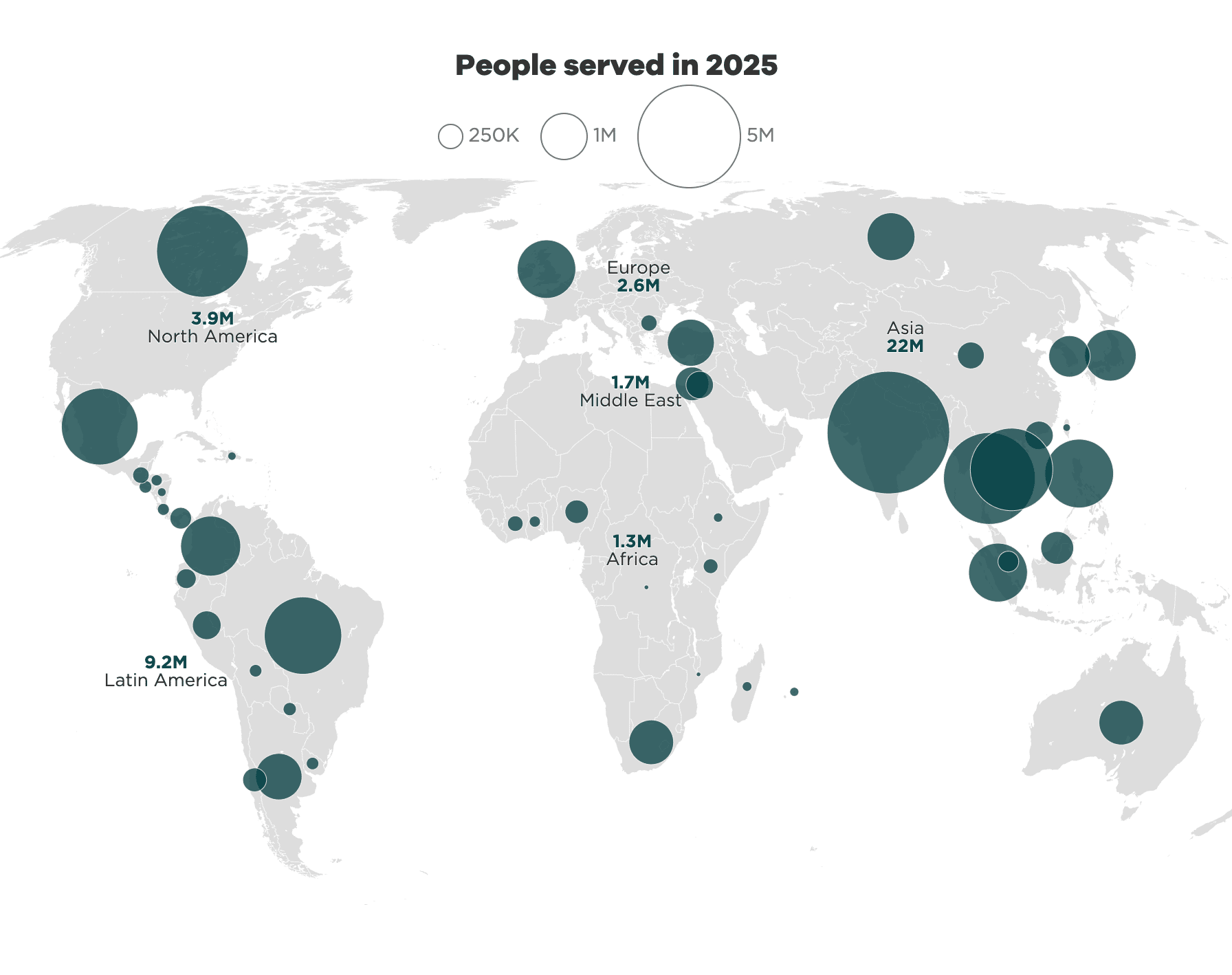
Network food banks provided 820 million kilograms of food and other essential products —equivalent to 2 billion meals — to 40.5 million people in 2025, which is nearly equal to people served during the height of the COVID pandemic.
No Food Waste India reached an additional 200,000 people with over a million more kilograms than in 2024, due to the launch of chapters in new cities.
Driven largely by agricultural recovery, It Rains Food Bank of Ethiopia increased food recovered by 201%, allowing them to improve service while reaching 45% more people.
Up to 10 percent of global greenhouse gas emissions come from food that goes to waste. And when food decomposes, it creates methane, a greenhouse gas that traps more than 80 times more heat than carbon dioxide over the first 20 years.
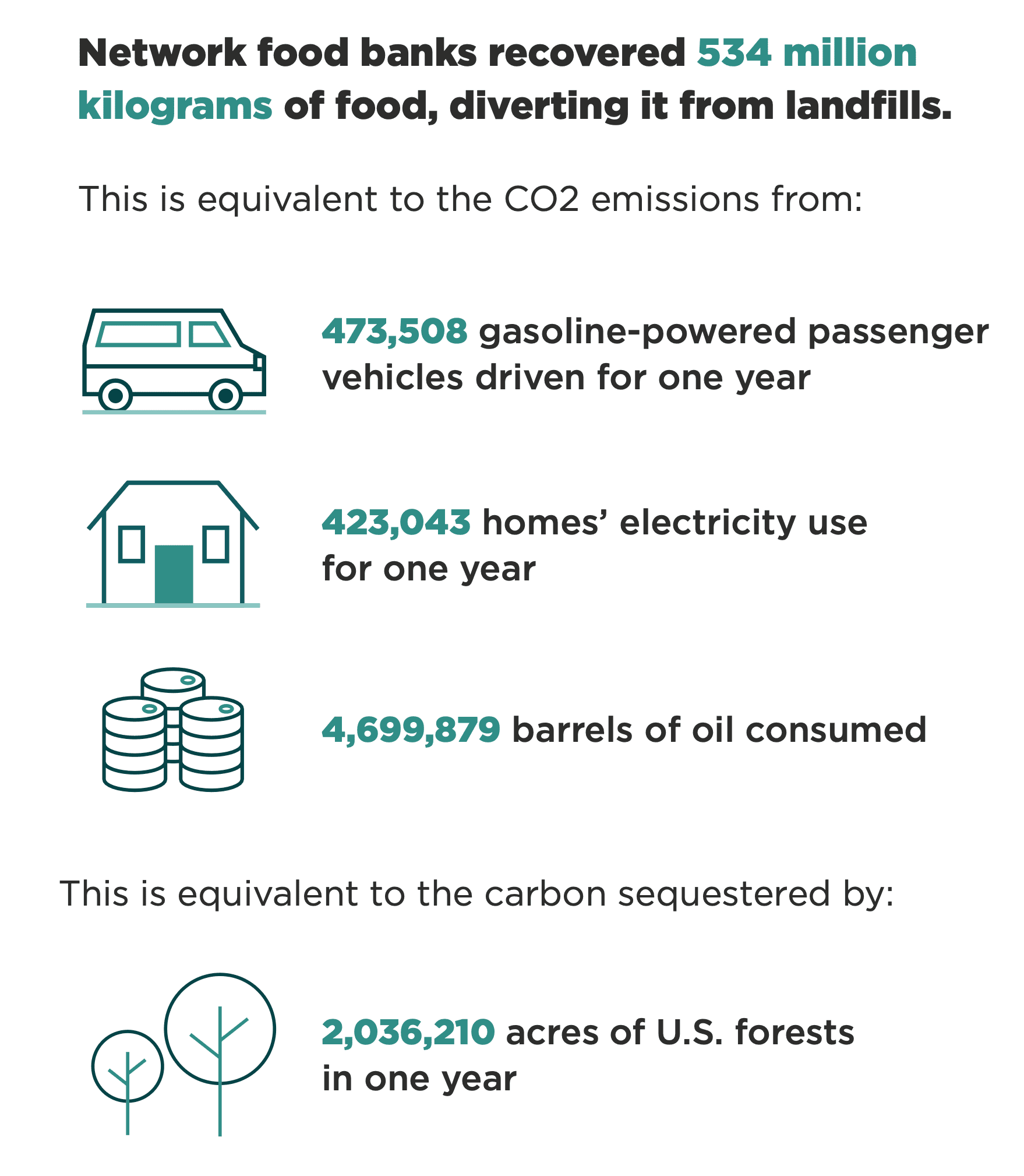
In 2025, food banks kept 534 million kilograms of food out of landfills, which prevented 2 million metric tons of CO2e — that’s equal to the emissions of 473,000 passenger vehicles in a year or the amount of carbon captured by a 2-million-acre forest.
Related to this work, food banking organizations in six countries became eligible for climate financing either through accessing the voluntary carbon market or through incorporating food banking into national climate plans. GFN is working with nine additional food banking organizations to access climate financing in the years ahead.
That’s particularly relevant because, as of 2025, 61% of the network had a budget that is less than US$1 million. Strong data combined with inclusion in official government plans can lead to climate finance opportunities, which help food banks diversify revenue streams.
For example, UNIDO, the United Nations Industrial Development Organization, fully funded an upgrade of Banco de Alimentos Quito’s refrigeration system — which was directly connected to the food bank’s environmental impact data collected from GFN’s FRAME methodology. And FoodForward South Africa’s methane project was recently approved for the government’s Just Energy Transition (JET) Funding Platform Project Register. These cases show a direct line that connects climate data, government recognition and access to international climate finance — the pathway GFN is replicating across its network.
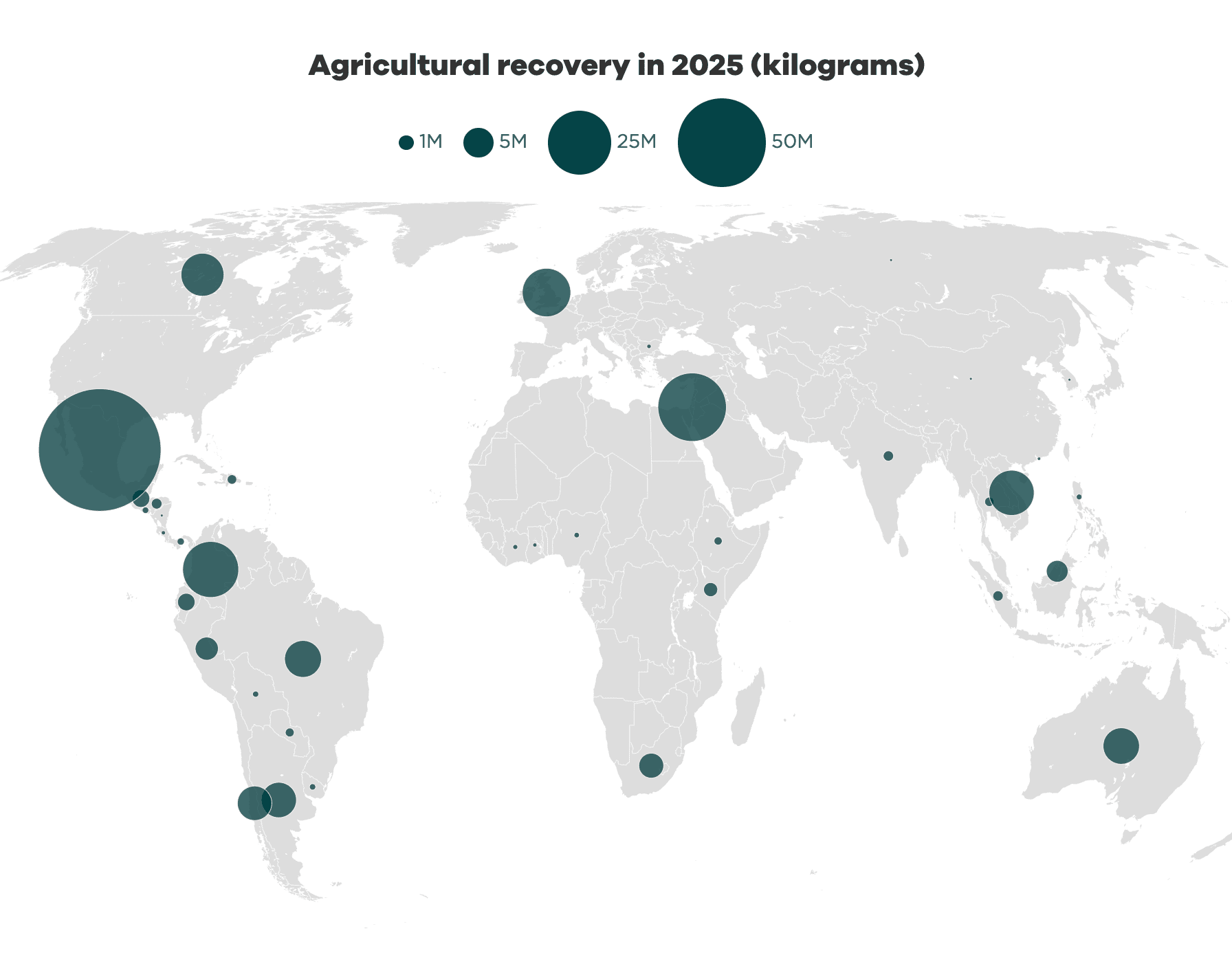
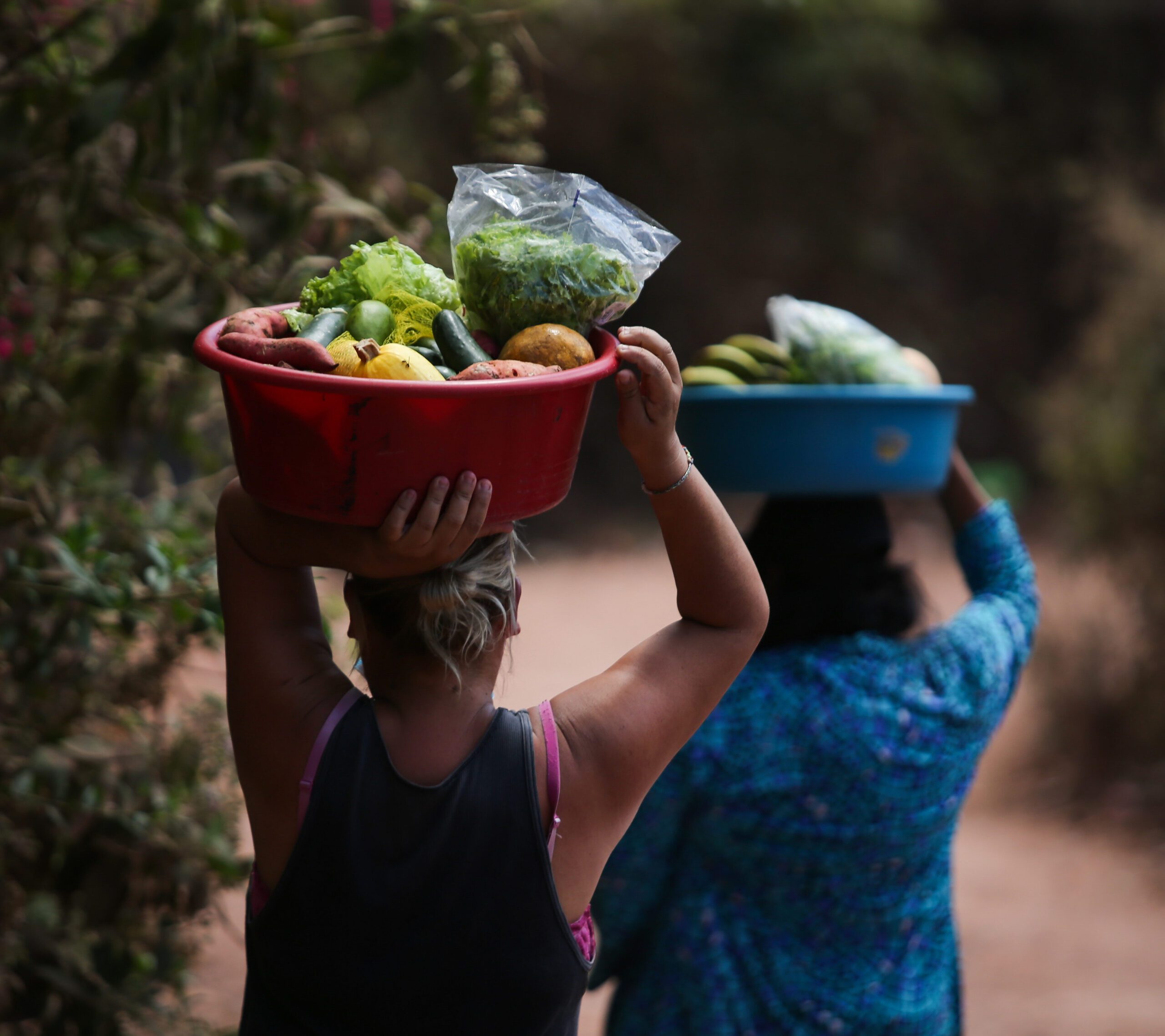
Increasingly, food banks are partnering with small- and large-scale farmers to collect surplus food to distribute to people facing hunger. Right now, more than two-thirds of GFN members support some version of these agricultural recovery programs.
In fact, supported by GFN’s Agricultural Recovery Hub, food banking organizations sourced 55% more from agricultural sources in 2025 than they did in 2024, delivering 228 million kilograms of nutritious food to people.
This emphasis on recovering fresh produce is a large part of the reason that the single largest category of food recovered by GFN members in 2025 was fruits and vegetables.
Agricultural recovery is a major contributor to total kilograms distributed by food banks at all sizes and stages of development. It even accounts for most kilograms distributed for some food banking organizations, like Bancos de Alimentos de Argentina (97%), Leket Israel (96%), Red de Bancos de Alimentos de México (53%), It Rains Food Bank of Ethiopia (100%) and The Lost Food Project, Malaysia (82%).
For food banks like FoodCycle Indonesia, investment in agricultural recovery pays dividends quickly. FCI started an agricultural recovery program in 2024. In 2025, after expanding the program to new areas, they expanded total kilogram distribution by 300%.