New Report Highlights Progress and Opportunities for Food Redistribution in Greece

In Europe alone, 59 million tonnes of food are either lost or wasted every year. At the same time, 42 million people cannot afford a nutritious meal every other day. The latest country report of the Global Food Donation Policy Atlas examines the efforts to combat this paradox, to reduce food waste, and strengthen food donation policies in Greece


[Athens, Greece – April 29, 2026] – The Harvard Law School Food Law and Policy Clinic (FLPC) and The Global FoodBanking Network (GFN), in collaboration with the European Food Banks Federation (FEBA), are releasing a new country report on Greece as part of the Global Food Donation Policy Atlas. The project examines the legal frameworks and national strategies aimed at supporting food recovery and donation, providing up-to-date insights to help countries identify and overcome barriers in preventing food loss and waste. This is the latest in the ongoing “EU Series” of reports produced by the Atlas.

This report offers targeted policy recommendations to improve food redistribution and strengthen food waste prevention in Greece. While Greece has articulated plans to improve food waste management and encourage food donation, such as through a pay-as-you-throw scheme and developing national donation guidelines, significant gaps remain in the implementation of these policies.

“This research is a great opportunity to identify institutional limitations and good practices from around the world, that could also be implemented in Greece and help the food banks scale up and open new horizons. It was a unique experience to be part of this journey, and help put Greece on the Global Food Donation Policy Atlas,” said Dimitris Nentas, General Manager from Food Bank Greece.

“Greece has already taken important steps to reduce food waste and support food donation, from implementing expanded food waste reporting requirements to ensuring the VAT system does not disincentivize the donation of surplus food—sending a powerful message that safe, surplus food should feed people, not landfills,” Emily Broad Leib, director of the Food Law and Policy Clinic, said. “Our research, published in April 2026 with the support of on-site partners including Food Bank Greece, shows that extending tax deductions for food donations to businesses, adopting a Good Samaritan law to protect good-faith donors and food banks, and strengthening food waste deterrence—such as using a food donation requirement for large retailers—would unlock even more food for people experiencing hunger and advance Greece’s environmental and social goals.”

“Across Europe, the reality is clear: the issue is not a lack of food, but the absence of systems that make redistribution possible at scale,” said Esteban Arriaga Miranda, CEO of the European Food Banks Federation. “We welcome the important steps already taken by the Greek authorities to strengthen food waste prevention and support food donation. Through the European Food Banks Federation, a movement of tens of thousands of people, and with the strong engagement of Food Bank Greece, a key part of our infrastructure, we see every day how surplus food can be redirected to those who need it most. Initiatives such as the Global Food Donation Policy Atlas are essential to compare national systems, identify best practices and remaining barriers, and help build more coherent and effective policy frameworks. This report is a call to action: with the right policy choices, Greece can unlock this potential and ensure that food is directed where it belongs, on people’s plates.”

“The latest Atlas EU Series report on Greece goes hand-in-hand with efforts across the EU to slash food waste, which costs the region €130 billion per year,” said Lisa Moon, president and CEO of The Global FoodBanking Network. “Food banks play a vital role in reducing food waste while improving food security. The report’s recommendations give lawmakers practical advice to cut waste and increase food donations, benefitting both people and the planet.”

Key Recommendations in Greece

  • Tax Incentives: Amend the Income Tax Code to allow businesses to claim tax deductions for food donations. This would create a financial incentive to donate surplus food rather than dispose of it.
  • Liability Protection: Establish clear liability protection for food donors and intermediaries to encourage food donations by reducing legal concerns.
  • Food Waste Deterrence Policies: Require actors across the food supply chain, such as businesses over a certain size, to donate safe surplus food to people.

About the Global Food Donation Policy Atlas

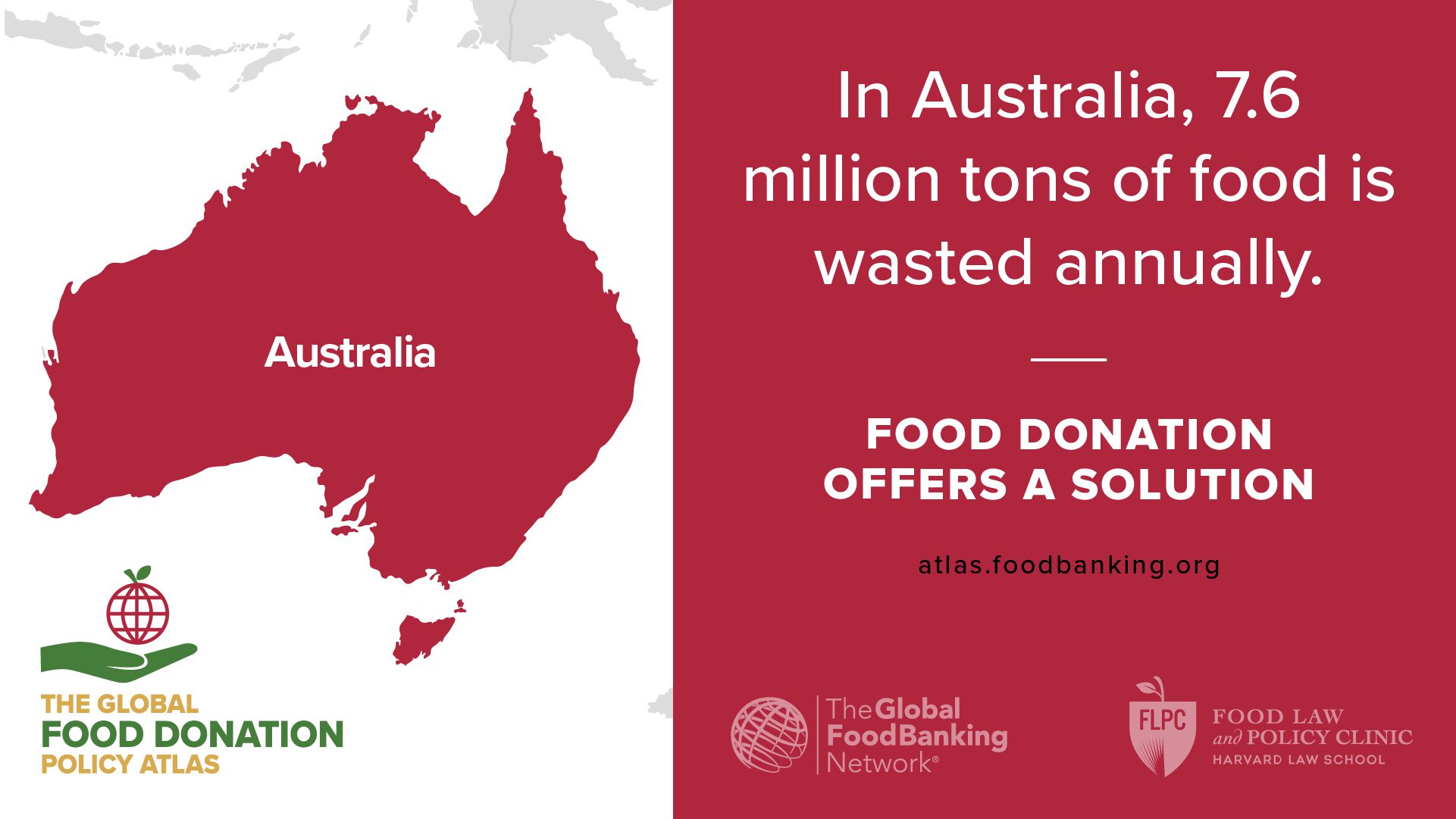
The Global Food Donation Policy Atlas, a global partnership between FLPC and GFN, identifies national laws and policies that support or hinder food donation and offers recommendations to strengthen legal frameworks and fill policy gaps. The project aims to help governments and stakeholders create enabling environments that promote food recovery, reduce food loss and waste, and support those facing food insecurity.

Legal guides, policy briefs, and executive summaries for more than 25 countries and the European Union are available at atlas.foodbanking.org.

About the Harvard Law School Food Law and Policy Clinic

FLPC serves partner organizations and communities by providing guidance on cutting-edge food system legal and policy issues, while engaging law students in the practice of food law and policy. FLPC focuses on increasing access to healthy foods; supporting sustainable food production and food systems; and reducing waste of healthy, wholesome food. For more information, visit www.chlpi.org/FLPC.

About The Global FoodBanking Network

The Global FoodBanking Network (GFN) supports community-driven solutions to alleviate hunger in more than 40 countries. While millions struggle to access enough safe and nutritious food, nearly a third of all food produced is lost or wasted. GFN is changing that. GFN believes food banks directed by local leaders are key to achieving Zero Hunger and building resilient food systems. For more information, visit www.foodbanking.org.

About the European Food Banks Federation

The European Food Banks Federation (FEBA) is a nonprofit organisation that brings together more than 350 food banks and branches, with members in 28 countries in Europe. They recover surplus food, much of which would otherwise be thrown away, and redistribute it to charitable organisations and social centres that take care of people in need. For more information, visit www.eurofoodbank.org.

decorative flourish

Related blogs

Back to News