
Global NGOs Deliver Call to Action on Food Waste for COP31 

Critical actions to accelerate progress on goal to halve global food loss and waste must be implemented at COP31 


A consortium of global organizations that are implementing food waste solutions, including the Academy of Global Food Economics and Policy (AGFEP)Boucle d'ambitionGlobal FoodBanking NetworkRéFEDWorld Resources InstituteENVELOPPER et WWF are calling on the COP31 presidency and Climate High-level Champion to adopt three key actions that will drive progress toward the global goal to halve global food waste by 2030.  

With less than four years to achieve this enormous goal, these NGOs have issued the call-to-action during London Climate Action Week to inspire further commitments and action on the road to COP31. 

The group asks the COP31 Presidency and Climate High-Level Champion to support the following actions in the lead up to COP31:  

  1. Formally recognize the urgency and opportunity of advancing food loss and waste reductions as a climate solution, aligned with the priority focus on Zero Waste and Food Security at COP31, and beyond. 
  2. Translate existing global and national commitments on food and waste into concrete policies and implementation road maps backed by political will, on the basis of available science, good policy practices, and solid monitoring and evaluation frameworks. 
  3. Unlock financial flows necessary to accelerate reductions in food waste, improve food security, cut methane emissions, and build resilient communities. These financial resources must reach national and sub-national actors that are delivering progress on the ground. 

Recognizing that the COP31 Presidency and Climate High-Level Champion have signaled that food loss and waste will be a priority this year, the group wants to ensure that this vision is turned into concrete actions in support of related issues around food security, hunger, the circular economy, efficient use of resources and climate change.  

Globally, food loss and waste contribute between 8-10% of all global emissions and annually humans discard more than one billion tonnes of food that could have been eaten. While higher seasonal temperatures, extreme heat events, and droughts often lead to significant volumes of food being wasted or lost. 

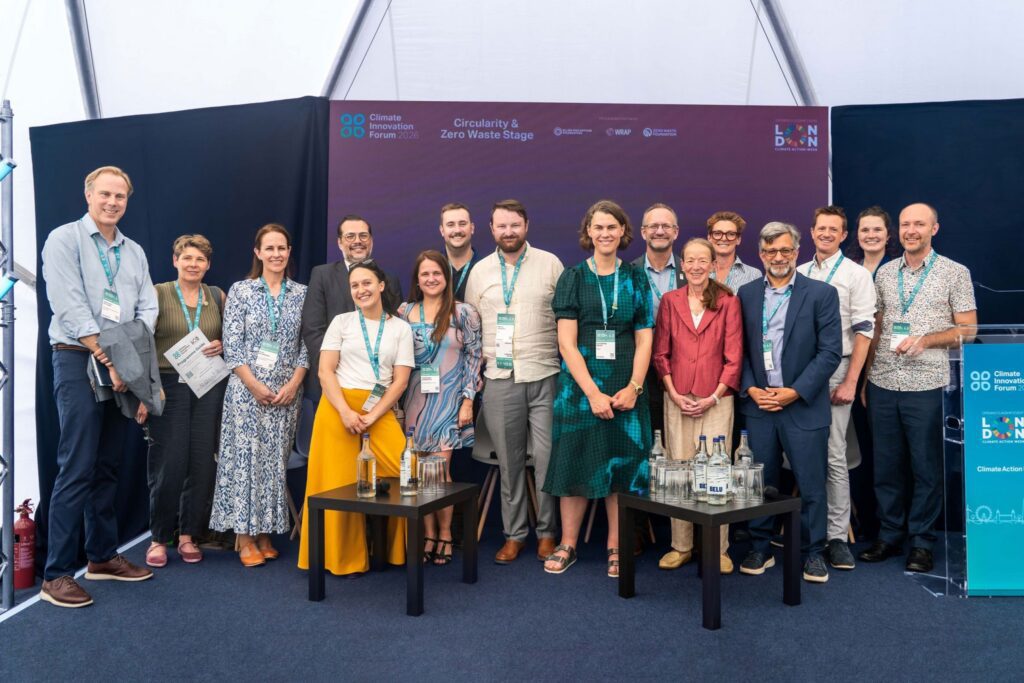
The call-to-action was delivered at an event held during London Climate Action Week. Called Cutting Food Waste: Accelerating Zero Waste and Strengthening Food Security on the Road to COP31 this included several of the groups, as well as UK Minister Mary Creagh CBE MP, the CEO and co-founder of Ambition Loop and Climate High-Level Champion from COP25 Gonzalo MuñozCaroline Urmeneta from the Global Methane Hub, Dr Liz Goodwin OBE, Senior Fellow & Director at WRI, Carlos Silva Filho, Special Advisor to the COP31 Climate High-Level Champion, as well as other experts. 

The call-to-action builds on an earlier call-to-action issued to national governments last October. It is also consistent with the Plan of Accelerationwhich was an output of the Action Agenda at COP30, specifically the plan Advancing Food Security and Nutrition through Food Recovery and Food Loss & Waste Reduction. 

This group of leading non-governmental organizations will continue to support governments and businesses by providing technical expertise and reporting tools and help build further coalitions, and deliver on-the-ground solutions across sectors and geographies. Its goal remains the transition of the food system to a more resilient, efficient, and fairer model and to help deliver a zero-food waste world with improved food security, lower emissions and a healthy and more sustainable future on the table for everyone.  

  • Gonzalo Muñoz, CEO and Co-founder of Ambition Loop and COP25 Climate High-Level Champion, said: “Food waste reduction is one of the greatest untapped opportunities in our fight against climate change. Businesses, cities, farmers and communities around the world are already showing what is possible, proving that cutting food waste delivers on emissions, food security and economic resilience all at once. COP31 has an unprecedented opportunity to be known for delivering the enabling policies and financial incentives that will take action on food waste to a truly global scale.”  
  • “Reducing food waste is one of the most effective and efficient ways to cut emissions and improve food security—which has been recognized by the COP31 Presidency and Climate High-Level Champion,” said Lisa Moon, President and CEO, The Global FoodBanking Network. “Working our partner food banks in more than 50 countries, GFN collects and redistributes surplus food to millions of people, while reducing methane emissions. We urge global leaders to follow-up their bold vision with action that will unlock resources and drive on-the-ground progress toward more a heathier future for people and the planet.” 
  • ReFED President Dana Gunders said, “Reducing food waste is a straightforward solution where everyone wins. Farmers and food purveyors increase their incomes, communities become more resilient, and food banks have more supply—all while reducing methane.”  
  • Dr Liz Goodwin, OBE Senior Fellow & Director at WRI said, “Minimizing food waste is one of the smartest ways to deliver more nutrition and value from the food we already produce. But progress is not inevitable. Governments must make food waste a priority, policymakers must embed it in national strategies, and funders must back the people and programs making a difference on the ground. We all have a part to play, from the COP31 Presidency to the parent making the weekly grocery list. If we act now, the rewards will be felt by families, communities, and the planet for generations to come.” 
  • Catherine David, CEO WRAP said “If food waste is the opportunity, collective action is the proven solution that works. We are proud to convene a network of 10 global Food Pacts bringing together businesses, governments, and people to act on food loss and waste. Together, 920 organisations have committed to action across six continents. These Pacts represent 14% of the global population who produce 20% of global food waste. Our collective global impact to date has been huge – preventing 220,000 tonnes of food going to waste, redistributing 2.7 million tonnes of surplus food and reducing emissions by 680,000 tonnes. Businesses have saved money, households have reduced their food bills, and governments have built more resilient food systems through acting on food waste. I urge the COP31 presidency and governments to join us in scaling the action we so urgently need on a truly global scale.” 

###

  • Boucle d'ambition is a global NGO, headquartered in Chile, on a mission to deliver and inspire accelerated, coordinated, transformative action across pressing climate and nature priorities. Ambition Loop was co-founded in 2023 by Gonzalo Muñoz and Nigel Topping, the COP25 and COP26 High Level Climate Champions, and a team of highly-experienced practitioners with deep expertise in catalysing collaborative, context-specific approaches to global challenges. We have a track record of delivering complex, large-scale initiatives. We work across action areas including agriculture, land and food systems; low-carbon industry and circularity; and ocean and marine ecosystems. We believe that bold action from real economy actors (businesses, finance institutions, cities, civil society, frontline leaders and others) can drive governments to take bolder action faster, and vice versa; enabling policy and financial incentives from governments can help spur action in the real economy. This is the ‘ambition loop’. We work with a diverse range of partners to co-create strategies and approaches that adapt to rapidly-changing contexts and leverage opportunities. We strive to always be movement generous and are committed to keeping ambition high. Learn more about our work at ambitionloop.earth 
  • Food banking offers a solution to both chronic hunger and the climate crisis. Le réseau mondial des banques alimentaires works with partners in more than 50 countries to recover and redirect food to those who need it. In 2024, our network provided food to more than 38 million people, reducing food waste and creating healthy, resilient communities. We help the food system function as it should: nourishing people and the planet together. Learn more at banquealimentaire.org  Contact: media@foodbanking.org  
  • RéFED is a U.S.-based nonprofit that partners with food businesses, funders, solution providers, policymakers, and more to solve food waste. Its vision is a sustainable, resilient, and inclusive food system that makes the best use of the food we grow. The organization serves as the definitive source for food waste data, providing the most comprehensive analysis of the food waste problem and solutions to address it. Through its tools and resources, in-person and virtual convenings, and services tailored to help businesses, funders, and solution providers scale their impact, ReFED works to increase adoption of food waste solutions across the supply chain. To learn more about ReFED and solutions to reduce food waste, please visit www.refed.org. 
  • World Resources Institute (WRI) works to improve people’s lives, protect and restore nature and stabilize the climate. As an independent research organization, we leverage our data, expertise and global reach to influence policy and catalyze change across systems like food, land and water; energy; and cities. Our 2,000+ staff work on the ground in more than a dozen focus countries and with partners in over 50 nations. Learn more at wri.org.  
  • ENVELOPPER is a global environmental action NGO catalysing policy makers, businesses and individuals to transform the systems that create our food, textiles and manufactured products. Together these account for nearly 50% of global greenhouse emissions. Our goal is to enable the world to transition from the old take-make-dispose model of production to more sustainable approaches that will radically reduce waste and carbon emissions from everyday products. To do so we examine sustainability challenges through the lens of people’s day-to-day lives and create solutions that can transform entire systems to benefit the planet, nature and people. Our work includes UK Packaging Pact, UK Food and Drink PactUK Textiles Pact and the global Food Pact Network et The Plastic Pact Network, and the campaigns Love Food Hate Waste et Recycle Now. We run Food Waste Action Week et Recycle Week (Mon 14 to Sun 20 September). 
Retour aux Actualités