A headshot of Naomi Gunnell, Walmart’s director of strategic initiatives, global food donation and hunger relief.
For the last decade, Walmart and The Global FoodBanking Network (GFN) have worked together to help get food to people who need it most. Walmart is the network’s largest product donor, donating more than 56 million kilograms, the equivalent of over 120 million pounds, to global food banks in 2025.
Even so, safe, edible food goes unrecovered. Walmart and GFN share the understanding that growth in charitable food recovery and redistribution is not limited by food supply but by capacity. Getting food from stores’ shelves to families’ tables requires that both retailers and food banks have the infrastructure, systems, and enabling conditions in place to safely rescue and redistribute it.
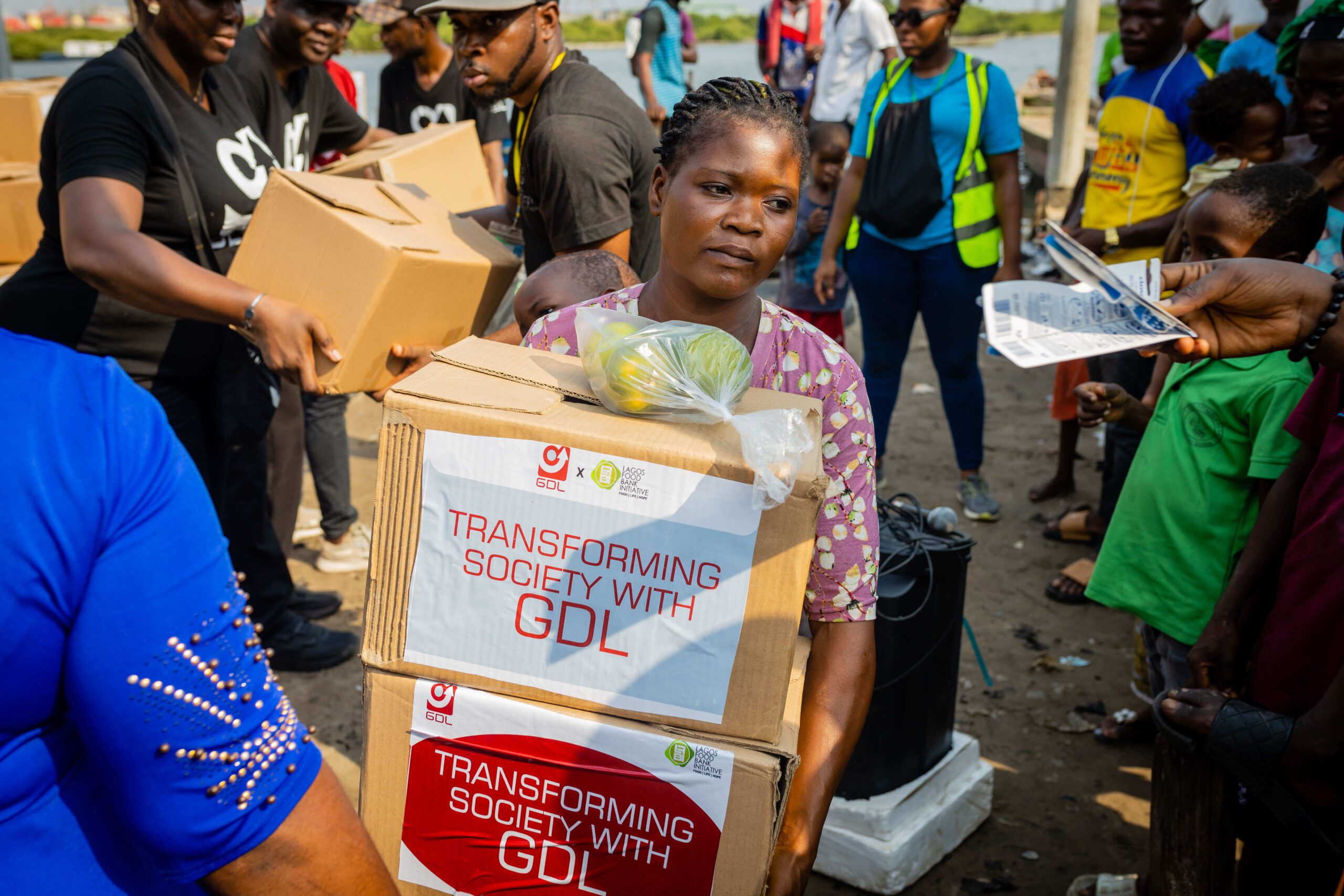
That’s why GFN recently announced a two-year, $5 million grant from Walmart to strengthen locally led food banks in seven markets across Africa and Latin America. This initiative, the Global Food Recovery Catalyst, will help food banks recover more surplus from retailers and upstream partners and unlock access to more food from Walmart at scale, for 1.4 million people.
A significant portion of the funding will go directly to food banks in South Africa, Chile, Costa Rica, El Salvador, Guatemala, Honduras and Nicaragua to strengthen the equipment, storage, transportation and technology needed to turn food excess into food access. The grant also supports GFN as a global infrastructure multiplier, building the data architecture, measurement and policy tools, and supply chain solutions that help food banks handle surplus food more efficiently. As part of the Global Food Recovery Catalyst, GFN will also provide technical assistance and peer learning opportunities that support both food banks and Walmart stores to make food donation the easiest and most natural option for their teams, advancing shared goals to reduce food loss and waste and improve food access in local communities.
Naomi Gunnell, Walmart director, strategic initiatives, global food donation and hunger relief, recently met with the GFN team to discuss the exciting new grant.
The Global FoodBanking Network: Why is supporting food banks a priority for Walmart?
NAOMI GUNNELL: Food is our business. We always say that our first job is to sell food — We work to prevent surplus food in the first place.
When food isn’t sold, it gives us an opportunity to ensure that that safe food is available for folks who need it, right? Instead of food going to a landfill or the trash, we want to make sure that food doesn’t go to waste, and it goes to people who need it.
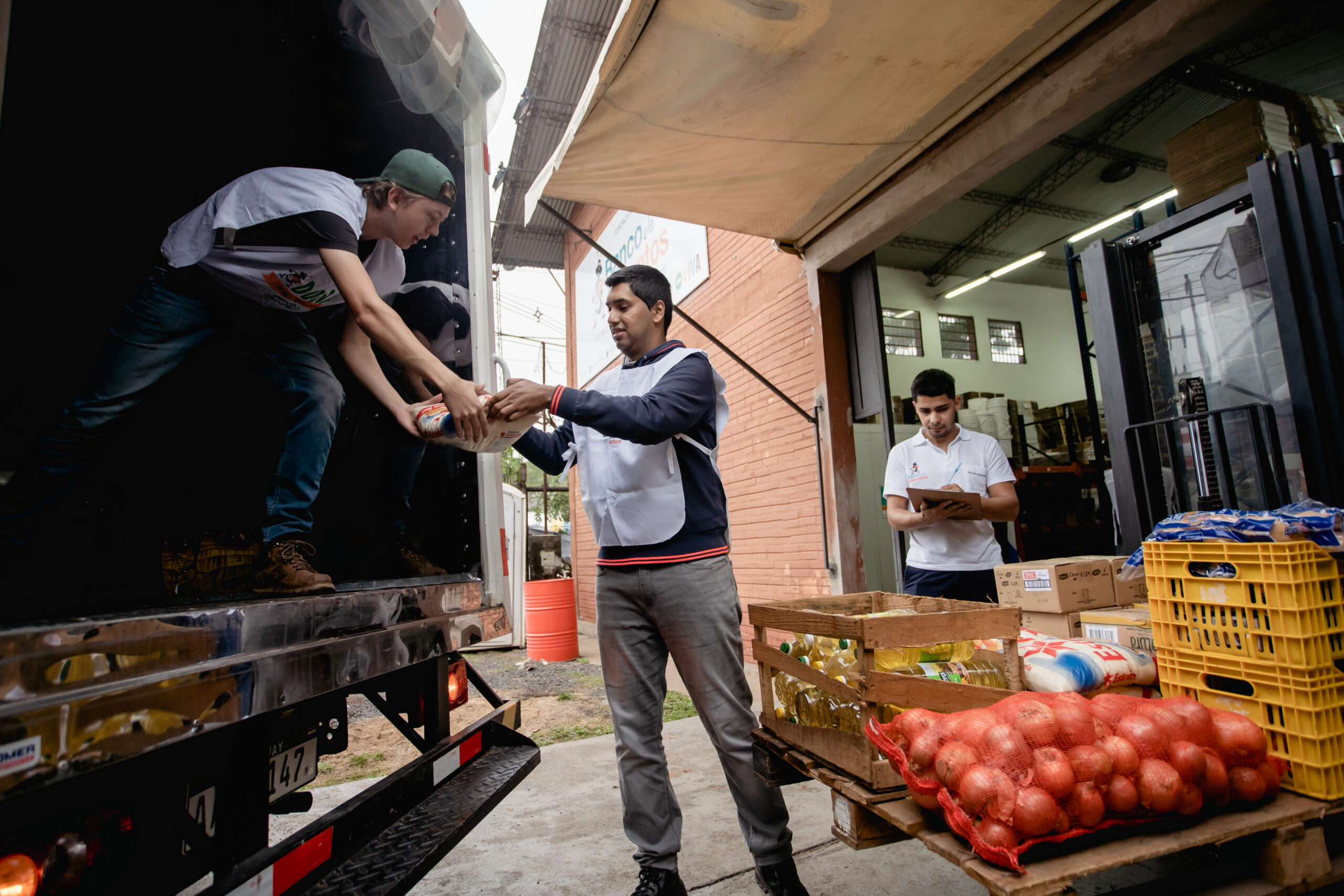
As we think about how we do that, food banks play a critical role in making that last part of the funnel work. So for us [Walmart], that means not just donating the food but helping to ensure that food banks have the capacity that they need to do that well. That’s transportation, that’s supporting with cold storage, technology and operating capacity to efficiently move those donated foods into our neighborhoods and communities that we serve.
GFN: How is Walmart addressing hunger and food loss and waste around the world?
NAOMI GUNNELL: 우리의 Healthier Food for All initiative is about how we make it easier for people to access healthier foods. From a business perspective, we do that around affordability. We do that thinking about our physical footprint in communities. Over 90% of folks in the U.S. are within 10 miles of a Walmart store. And then when you layer that in with e-commerce and ordering online and delivery, I think that number grows.
But when we think about it from a philanthropic perspective, for those who need support in accessing food and when we think about the emergency food system, what role does retail play?
One is the food donation piece and making that experience one where there is dignity. But then [we also think] about strengthening the actual infrastructure of food banking systems so that recovering surplus food from donors is easy. The transportation from store to food bank and from food bank to community is effective and efficient.
We are thinking about not just operations but also the quality of the foods available to folks who need it. So we’re also thinking about how we increase the availability of more nutritious foods in the emergency food system … like dairy, protein, produce.
GFN: Why did Walmart want to globalize its hunger relief and food donation strategy? And why did you choose to support GFN?
NAOMI GUNNELL: Walmart has worked with Feeding America for years. And one of the things that we’ve learned through that partnership is the importance of doing things hand-in-hand with community and with partners. As we looked globally, we saw an opportunity to bring that same level of intentionality to other markets.
GFN brings global reach, obviously, but there’s also the strong local relationships and expertise that helps us understand those differences market to market and just how diverse each market really is. And I think that’s true not just for markets, but for communities … Especially as we’re thinking about globalization, we want to ensure that we are not applying a one-size-fits-all approach, but we’re being responsive to the needs within each community. And GFN allows us to do that.
It is incredibly valuable to find an organization that has both the technical expertise and the capability to take a grant and do good with it but also the heart to care about community, to care about the work that they’re doing, and to be thoughtful and intentional about how they are doing that work. That care, that deep care, shows not only in how you talk about the work, but even down to how you take time and put together a proposal.
GFN: What does Walmart’s grant to GFN look like?
NAOMI GUNNELL: Essentially, it is a grant that will support GFN in providing the technical assistance and capacity that we talked about — so the cold storage, the transportation, really shoring up the infrastructure for food banks to get the food into the hands of folks that need it. And then there’s the technical assistance piece, understanding what data needs to be in place to track pounds that are being moved through the system, how fast that is working.
And, are there opportunities for the entire food donation system to have better trackability and traceability through the food donation system? Then, how do we support those food banks with the resources that they need to, depending on their stage of maturity, either get the basics in place or expand and build their capacity to do more.
That is a $5 million investment over two years to support that work. I’m really excited to see what is to come from this work.
GFN: Why is Walmart sponsoring the GFN Summit in November in Toronto, and what are you looking forward to at that event?
NAOMI GUNNELL: We see GFN as a leader in the global space. The work is very critical, very valuable. I think it’s an opportunity for us to support the work, but it’s also an opportunity for us to demonstrate an approach to philanthropy that’s sustainable, impactful and maybe a little bit different than what some might think about corporate philanthropy.
One of the things I’ve found so important is the power of bringing folks in the room together — not only to share ideas, to have the cross-pollination around what’s working for you in your community, how can we translate those insights and learnings into what we’re doing on a day-to-day basis. But it’s also tremendously important to build the camaraderie, because this work is hard. Let’s just say it. It’s hard work. It can be emotionally taxing because we care about it. So, whenever there is an opportunity to get people in the room together, there is so much value with things that are not necessarily quantifiable. There is this residual energy that folks tend to leave those spaces with.
I hope that people leave feeling connected, not only to the work, but to each other. When I think about GFN and the way you all approach the work, I love how you hold space for both. Because you are bringing both food banks and retail together, it’s special. You have to do the translation, and I love the way you talk about the work and [help find] the common ground. I hope folks leave with that kind of sense of connectedness.
GFN: What would you tell other companies about partnering with GFN?
NAOMI GUNNELL: The first thing I would speak to is the approach that companies bring to the work. I would say: Start by listening. There’s a level of expertise that we bring to this work as corporations, but there is a lot that we can learn. I would start by telling companies, when they’re partnering with any organization, to be open to listening and learning and being flexible to try new things — innovative solutions that might not necessarily fit within preconceived, perfectly squared-out strategies.
And then, also recognize that every community is different. Be open to listening and learning and designing with that in mind.
When I think about what I would tell them about partnering with GFN, I would say that GFN gives companies a way to connect to this global ambition with credibility, but without losing the locally led lens that the food banks bring.
Then, beyond the food itself, I would encourage companies to think about bringing their assets, thinking holistically about what your company can bring to the work, not just the financial contribution. Think about your technology, your logistics, your supplier relationships and any other capabilities that could strengthen the broader system beyond a one-time donation.
I think that, when we work together with a common goal, we can make change. We can improve outcomes for people and the planet. It’s possible. Things are possible when we work together.