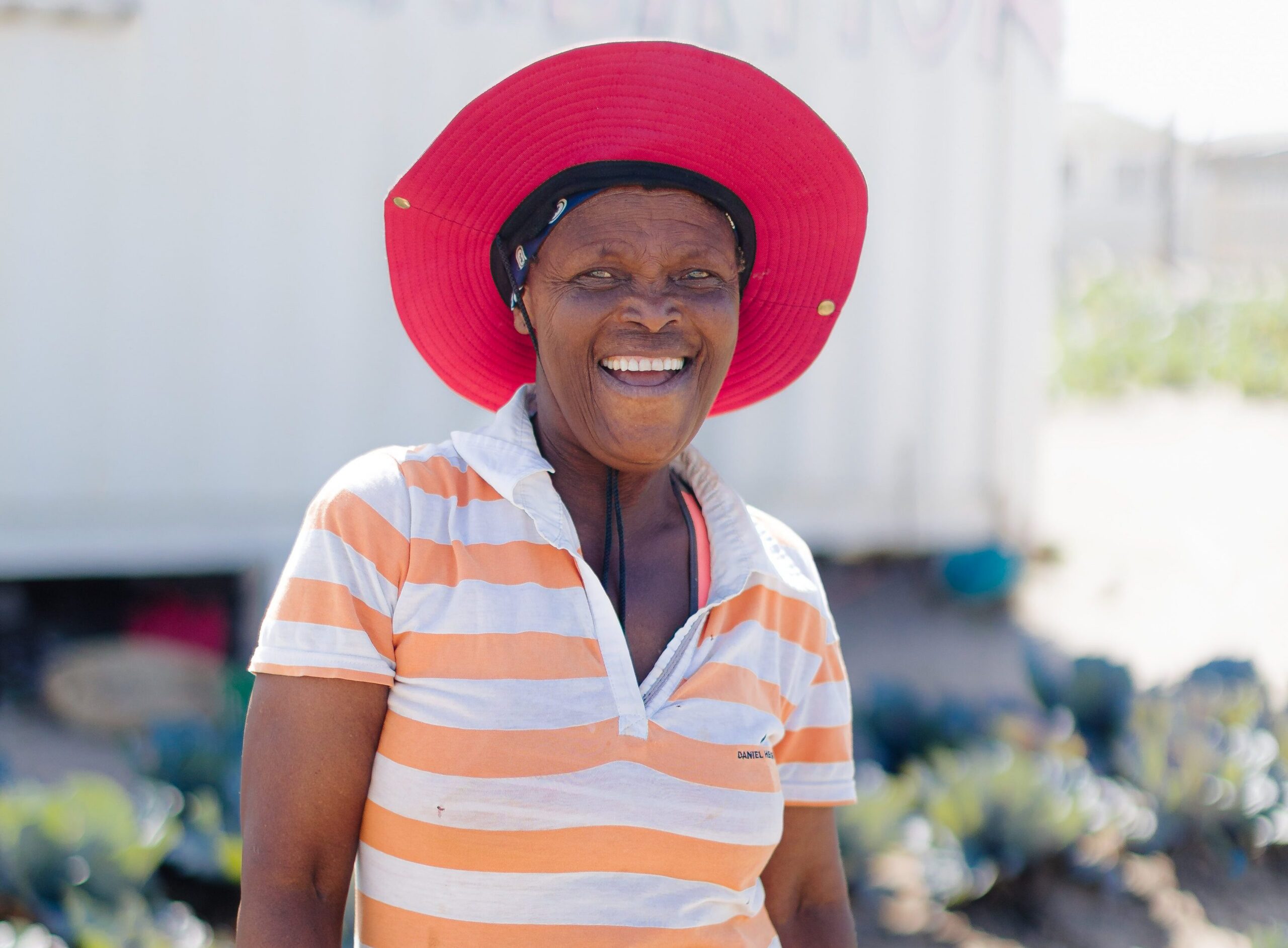
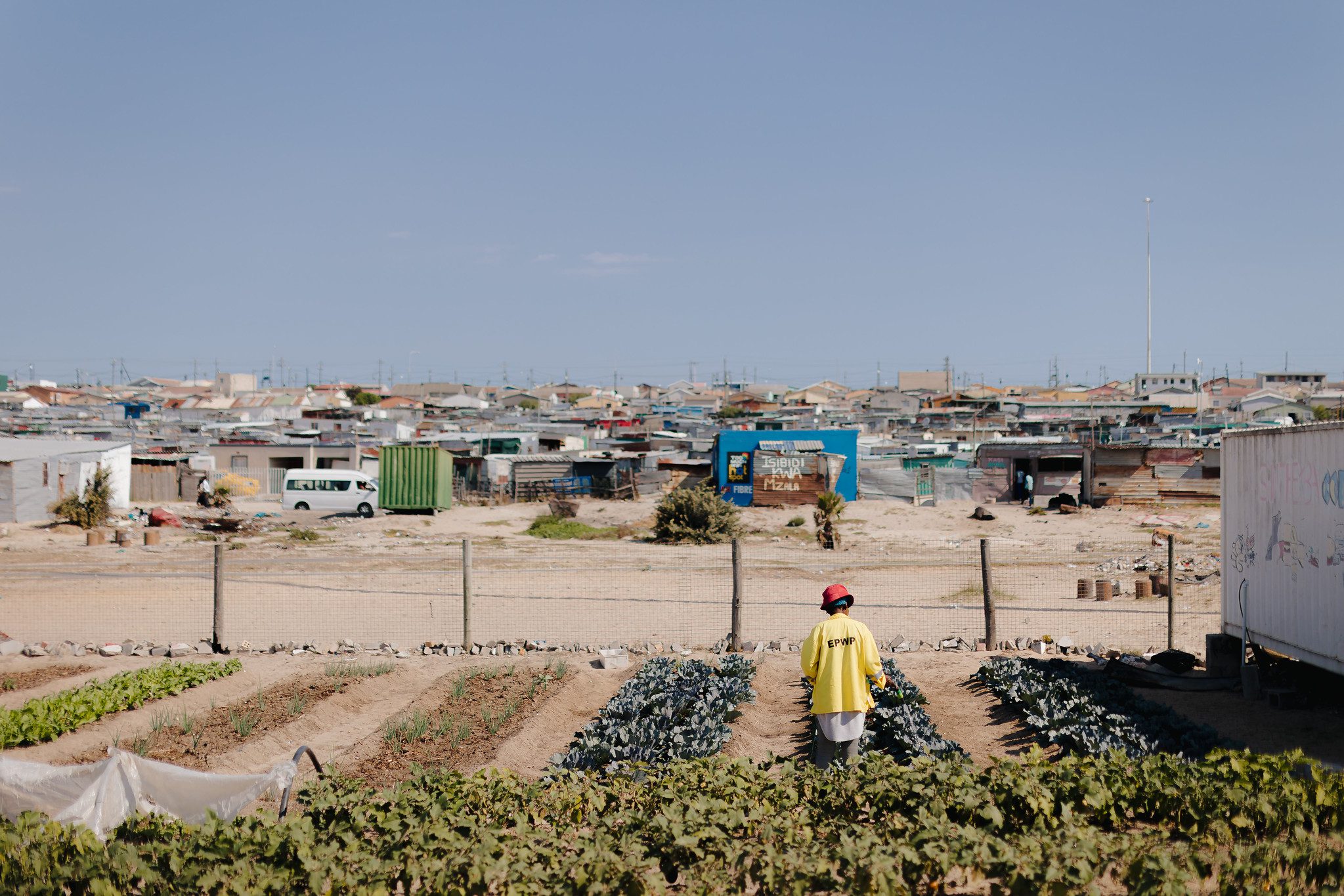
Par une journée venteuse et nuageuse dans le township de Khayelitsha, au Cap, Nonina Pama taquine quelques-uns de ses collègues jardiniers, qui ont presque un demi-siècle de moins qu'elle.
“ Tu es jeune, utilise ta force, ton énergie ! ” dit-elle avec emphase. “ Je suis forte, même si j’ai 67 ans ! Allez, mec, travaille comme moi ! ”
Cette démonstration a pour but de détendre l'atmosphère et de motiver son équipe, qui prépare une nouvelle plate-bande pour les semis d'épinards. Mais Nonina joint le geste à la parole : elle est partout dans le jardin, passant sans cesse du ratissage à l'arrosage, puis à la démonstration des techniques de plantation.
À chaque instant, elle capte l'attention. “ Vous m'écoutez au moins ? ” crie-t-elle en creusant des trous dans la terre. “ Oui ! On regarde ! ” répond le groupe, feignant l'exaspération.
Nonina est l'une des responsables des jardins de Sinethemba Ithemba, une organisation à but non lucratif qui fait un peu de tout pour répondre aux besoins de la communauté.
Bien que le jardin existe depuis plus d'une décennie, il a véritablement pris son essor ces deux dernières années grâce à un partenariat étroit avec FoodForward South Africa, membre du Réseau mondial des banques alimentaires.
“ Je vis des produits de mon jardin ”, explique Nonina. “ Vous pouvez constater par vous-même à quel point je suis en forme. ”
La fierté que Nonina tire de son énergie et de sa vitalité est amplement méritée. À son arrivée à Sinethemba, la situation était bien différente. Tout en faisant de son mieux pour subvenir aux besoins d'une famille de cinq personnes, Nonina luttait contre la malnutrition et la tuberculose.
“ C’était une période difficile et incertaine de ma vie. ”
En Afrique du Sud, le taux d'incidence du VIH/SIDA par habitant est parmi les plus élevés au monde ; il en va de même pour la tuberculose. À Khayelitsha, ces taux sont nettement supérieurs à la moyenne nationale.
Le traitement de ces deux maladies est étroitement lié à l'alimentation et à la nutrition. Le traitement de la tuberculose implique la prise de plusieurs médicaments pendant quatre à vingt-quatre mois et peut être éprouvant pour l'organisme. De nombreuses personnes ne peuvent tout simplement pas le prendre à jeun. Certains traitements contre le VIH/SIDA sont beaucoup mieux absorbés par l'alimentation ; or, comme il s'agit d'un traitement à vie, un accès régulier à une alimentation stable devient encore plus crucial.
Bien sûr, sans une alimentation suffisante, la malnutrition affaiblit le système immunitaire, rendant la guérison plus difficile. Et une alimentation saine est difficile à trouver pour beaucoup à Khayelitsha, où au moins la moitié des ménages sont en situation d'insécurité alimentaire modérée ou grave.
“ Les gens disaient : ‘Je ne peux pas suivre mon traitement car je n’ai pas de quoi manger’ ”, raconte Nolitha, ajoutant que Nonina avait interrompu son traitement lorsqu’elle est arrivée à Sinethemba.
“ C’était très important pour nous de cuisiner pour eux ”, a déclaré Nolitha. “ Nous avions un petit jardin. Il était tout petit et ne produisait pas beaucoup. ». C'est comment nous avons fini par aller à FoodForward.”
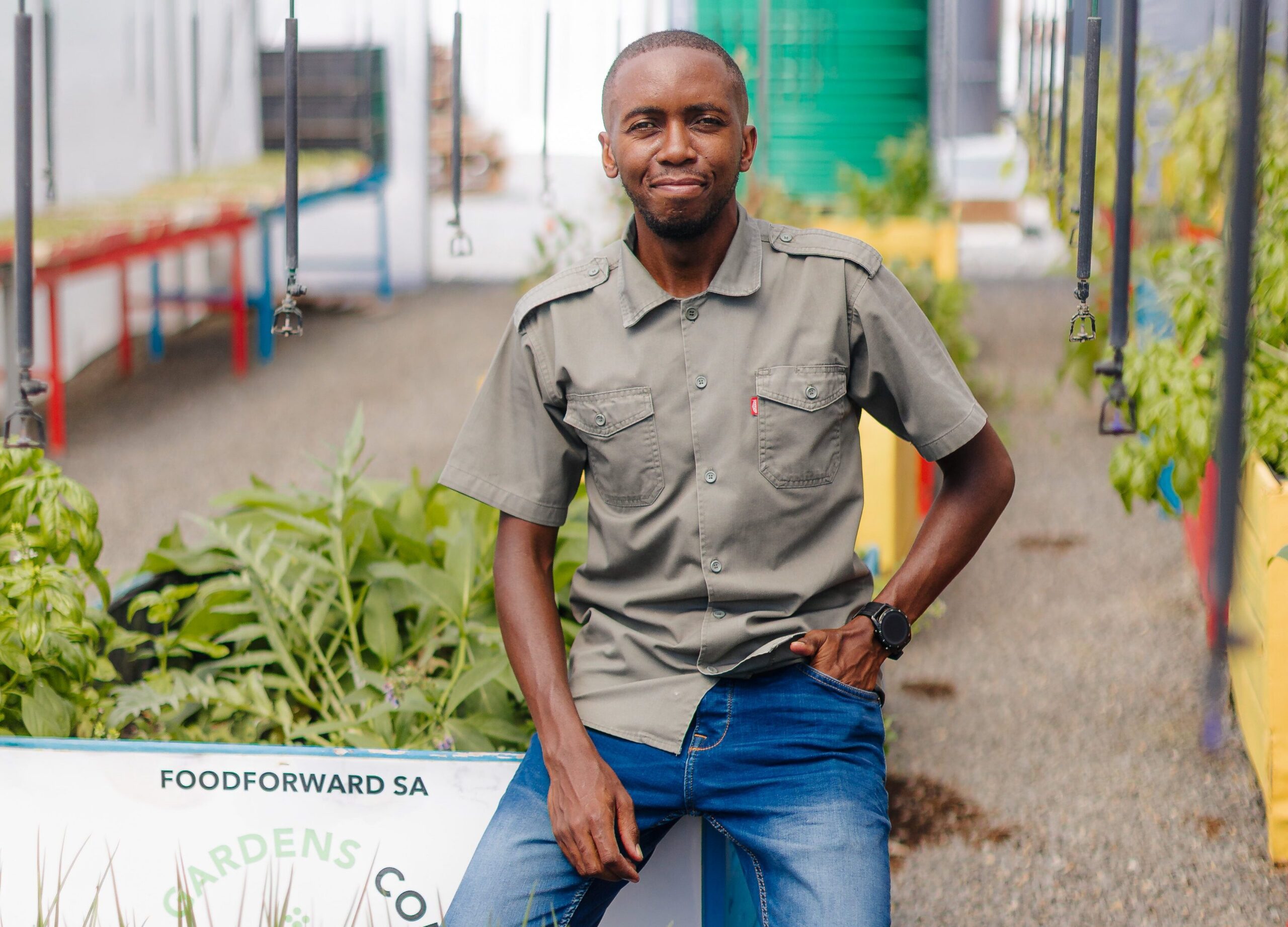
Devant les bureaux de FoodForward SA au Cap, Likopo Sehlabo s'acquitte de quelques formalités importantes avant de livrer des plants à Nonina à Sinethemba. Il fredonne un chant traditionnel sesotho tout en arrosant les plantes du jardin pédagogique.
“ C’est… communiquer avec ses plantes, leur parler, les motiver ”, explique Likopo, alias DK. “ On engage la conversation avec elles. J’aime bien [arroser] le matin, leur demander si elles ont bien dormi. ”
DK est l'agent de développement communautaire de FoodForward SA responsable du programme Food Gardens Connect, qui aide les communautés en situation d'insécurité alimentaire comme Khayelitsha à cultiver leurs propres aliments pour améliorer leur nutrition et leur santé.
Dans la serre située au fond du jardin, DK cultive des plants de légumes qu'il donne à Sinethemba Ithemba et à d'autres organisations partenaires — actuellement 24 organisations autour du Cap participent au programme.
Pendant six semaines, DK forme les participants au programme aux bases de l'agriculture : comment enrichir le sol, fabriquer du compost, repiquer les jeunes plants. Il les emmène souvent au jardin d'exposition pour mettre en pratique ces techniques. Ensuite, il leur apporte conseils et soutien chaque semaine. Par exemple, si un jardin est aux prises avec des ravageurs, DK aide les jardiniers à préparer leur propre pesticide naturel selon sa recette originale.
“ Grâce à ce programme ”, explique DK, “ j’espère que nous verrons des communautés… acheter simplement de la farine de maïs et de l’huile de cuisson — et que la nature leur fournira le reste. ”
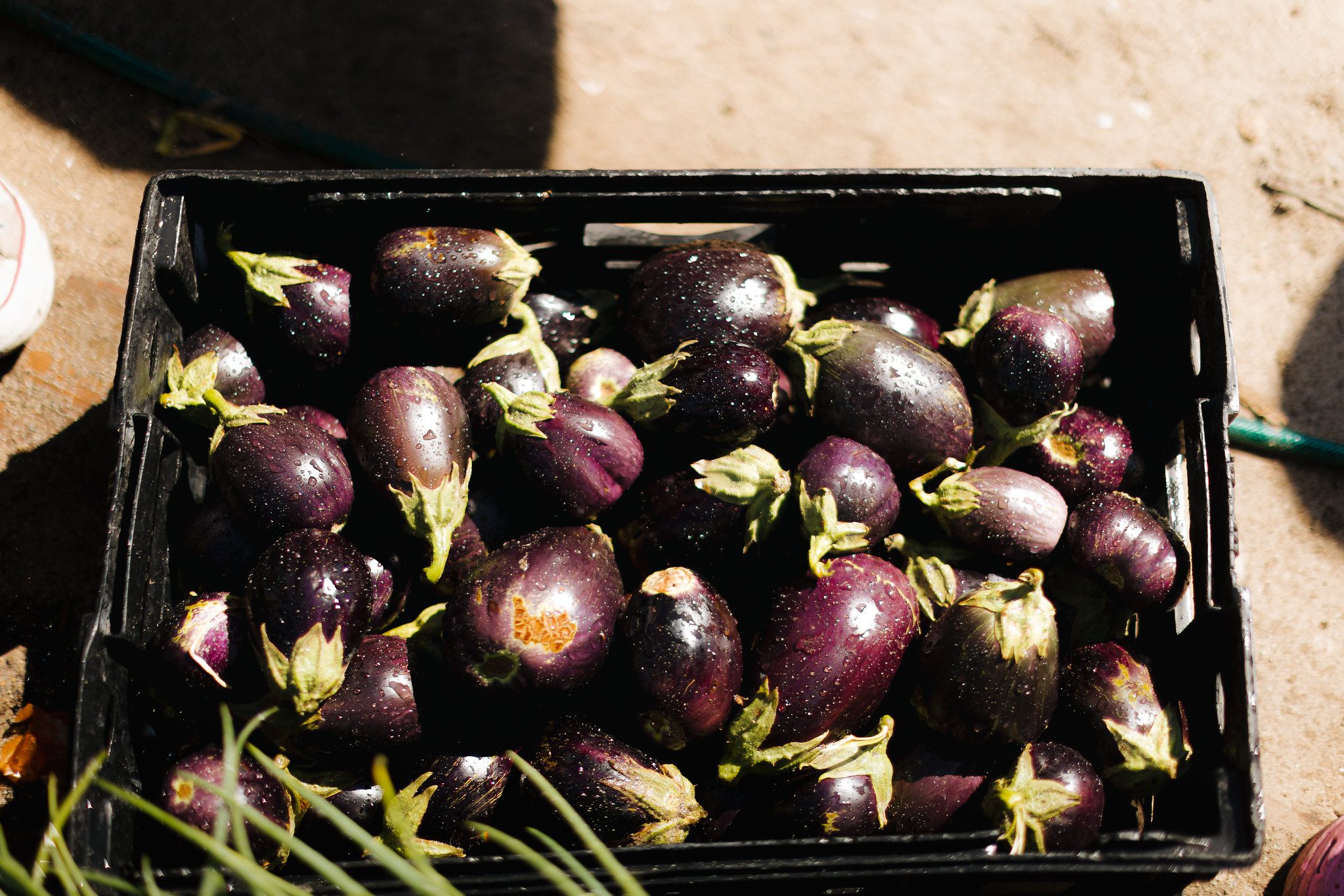
Tous ceux qui participent à l'entretien des jardins communautaires emportent chez eux des produits frais à maturité. La plupart des organisations, comme Sinethemba, utilisent ces récoltes pour approvisionner leurs cuisines communautaires. S'il reste des aliments après la récolte, FoodForward les rachète et les stocke dans son entrepôt. De là, l'organisation se charge de les redistribuer à d'autres organisations communautaires qui sauront les utiliser à bon escient. À ce jour, FoodForward a racheté plus de quatre tonnes de produits aux jardins communautaires, versant aux organisations environ 40 000 rands, soit près de 100 000 dollars américains.
“ Nous apprenons aux gens à cultiver leurs propres aliments, et ils peuvent ensuite inviter d'autres personnes de la communauté et transmettre ces compétences ”, explique Andy DuPlessis, directeur général de FoodForward SA. “ Et c'est ainsi que nous multiplions les bienfaits. ”
Prochainement, FoodForward prévoit d'étendre le programme Food Gardens Connect à d'autres régions du pays afin d'améliorer la nutrition des populations en situation d'insécurité alimentaire. Par ailleurs, grâce au soutien financier du Réseau mondial des banques alimentaires, FoodForward a lancé un programme en partenariat avec des cliniques de lutte contre la tuberculose qui ont subi des coupes budgétaires dans l'aide publique au développement.
“ Nous veillons à ce que non seulement les patients atteints de tuberculose, mais aussi leurs familles, reçoivent régulièrement de la nourriture jusqu'à leur guérison ”, explique Andy.
Aujourd'hui, à Sinethemba, les récoltes abondent pour nourrir la communauté : maïs doux, oignons verts, chou frisé, épinards, chou, aubergines, pastèques et diverses herbes aromatiques y prospèrent. Mais le jardin n'a pas toujours été aussi généreux.
“ Il y a eu un changement, c'est certain ”, affirme Nonina. “ On n'avait jamais eu de jardin comme celui-ci auparavant [dans le quartier]. Avant, ça ne ressemblait pas vraiment à un jardin communautaire. C'était même un vrai casse-tête. Puis FoodForward est arrivé. Ils ont tout changé. ”
Pour des personnes comme Nonina, qui souffrent de malnutrition et de maladies graves, un accès fiable à une alimentation saine fait toute la différence. Grâce à une combinaison de médicaments et d'une alimentation adaptée, sa santé s'est améliorée.
“ Le jardin a complètement transformé mon alimentation ”, dit-elle. Depuis son arrivée à Sinethemba et grâce aux repas quotidiens préparés avec les produits du jardin et de la cuisine communautaire, elle peut prendre ses médicaments contre la tuberculose.
“ La différence que je ressentais depuis que je consommais des légumes était visible ”, a déclaré Nonina. “ Je le sentais dans mon sang. ”
Après avoir terminé son traitement, la dernière consultation de suivi de Nonina a montré que son corps avait éliminé la bactérie de la tuberculose. Mais malheureusement, les analyses ont révélé autre chose.
“ Le VIH était clairement présent dans mon organisme ”, dit-elle.
“ C’était difficile. J’ai eu une crise d’urticaire et j’ai été hospitalisée. Nolitha et d’autres personnes de Sinethemba venaient me voir pendant les heures de visite. Ils m’apportaient des repas. ”
Nonina a commencé un traitement antirétroviral contre le VIH. Tout comme pour son traitement contre la tuberculose, une alimentation saine et régulière a renforcé son organisme et sa capacité à prendre les médicaments.
“ J’adore la nourriture ”, dit-elle, et lorsqu’on lui demande quel est son plat préféré, elle énumère au moins une douzaine de légumes. “ J’aime que ma nourriture soit colorée. ”
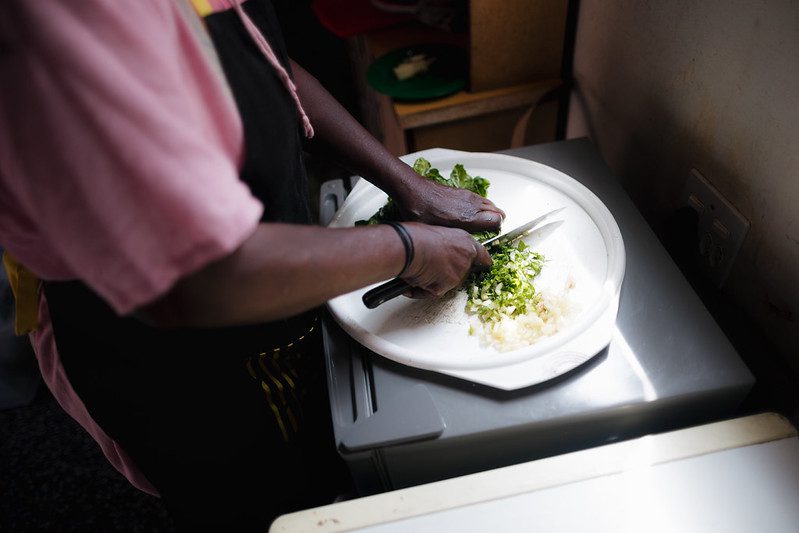
Avec le temps, Nonina a retrouvé la santé. Elle prend toujours des antirétroviraux, mais elle est active et pleine d'énergie. Nolitha l'a embauchée pour l'aider à s'occuper du jardin après sa guérison. Elle était parfaite pour ce poste.
“ Quoi qu’elle fasse, elle s’y investit pleinement ”, explique Nolitha. “ Elle aime l’ordre. ”
Le jardin a aidé Nonina à poursuivre sa convalescence en lui permettant de tisser des liens sociaux et de rester active. “ La force que j'ai puisée dans ce jardin me surprend parfois moi-même ”, confie-t-elle, ajoutant qu'il la maintient jeune.
“ Je tiens vraiment à ne pas vieillir prématurément. Je ne veux pas devenir une vieille grand-mère ”, dit-elle en riant. “ Je ne suis pas une grand-mère, grâce aux légumes de ce jardin. ».
“ FoodForward nous a nourris. Le jardin tout entier en est la preuve. ”