Alors que les premiers rayons dorés du soleil pointent à l'horizon, le Mercado de Productores Rosario bat déjà son plein.
Nico Lopez, la vingtaine, qui domine la plupart des autres hommes de sa haute stature, pousse une charrette à bras à travers le chaos organisé du marché. Un ballet incessant de travailleurs s'affaire autour de ce marché qui s'étend sur plusieurs pâtés de maisons. Les caisses en bois qui arrivent sont empilées en tours autour des vendeurs. Celles qui partent sont chargées dans des camions et des pick-ups, dont les suspensions peinent sous le poids de leur cargaison fraîche. Des centaines de milliers d'habitants de Rosario, en Argentine, s'approvisionnent chaque jour en fruits et légumes grâce à ce marché.
Mais dans un coin reculé du parking, des mouches pullulent autour des conteneurs à ordures verts où pourrissent de la laitue et des pêches.
“ Comme il s'agit de fruits et légumes frais, le marché génère naturellement beaucoup de déchets ”, explique Gustavo Suleta, gérant du Mercado de Productores Rosario. “ Les fruits et légumes constituent un type de déchet particulier, car ils restent sains et nutritifs pendant une courte période, mais n'ont plus de valeur commerciale. ”
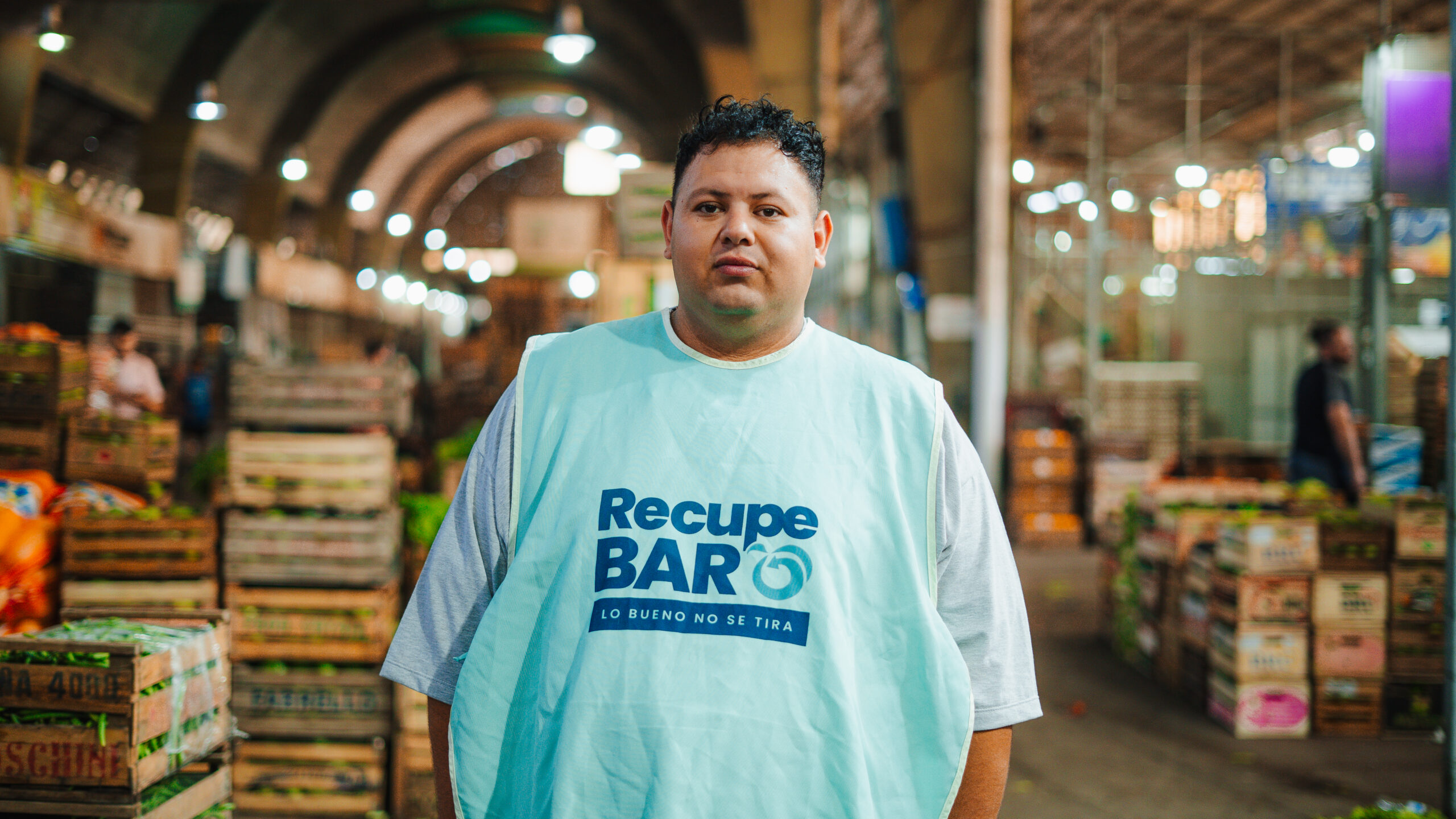
Nico et ses collègues parcourent le marché à la recherche de vendeurs confrontés à ce dilemme : des produits qu'ils risquent de ne pas pouvoir vendre.
“ Notre routine consiste à aller à la rencontre des vendeurs et à les saluer gentiment ”, explique-t-il. “ Nous leur demandons s’ils ont quelque chose à donner, des surplus, des aliments qu’ils s’apprêtent à jeter, pourvu qu’ils soient encore comestibles. Alors, on use de notre charme. ”
Il s'approche d'un vendeur, lui tape dans les mains et rit pendant quelques instants.
“ On aime bien plaisanter avec eux, du genre : "Allez, vous n'allez pas vendre ça, autant en faire don" ‘, dit-il en riant.
Malgré les plaisanteries, Nico sait que son travail est important.
“ Nous sommes aussi là pour sensibiliser le public ”, explique-t-il. “ Comme le dit notre logo : ‘Ne jetez pas les bonnes choses’. Au début, personne ne voulait faire de don, personne ne comprenait notre objectif. Mais petit à petit, nous avons convaincu les vendeurs. ”
Après la première tournée du matin, Nico et ses collègues reviennent avec une charrette pleine de blettes, de courges et de courgettes fraîches. Bientôt, un camion de Banco de Alimentos Rosario, la banque alimentaire de la ville, membre du réseau Bancos de Alimentos Argentina, viendra la récupérer. De là, les denrées sont distribuées à des centaines d'organisations qui nourrissent les personnes en situation d'insécurité alimentaire dans la ville.
Nico travaille depuis six ans chez RecupeBAR, le programme de relance des marchés de la banque alimentaire. Pour lui, RecupeBAR représente bien plus qu'un emploi stable ; c'est bien plus qu'une façon d'aider les autres.
C'est une façon de guérir.
Issu d'une famille ouvrière, Nico a dû gagner de l'argent dès son plus jeune âge et a commencé à vendre des bibelots sur les marchés locaux à l'âge de 12 ans.
Mais à l'adolescence, il se sentit différent et commença à avoir le sentiment de ne pas être à sa place.
“ Je ressens tout très intensément et j'entendais les gens dire des choses sur moi, utiliser des mots cruels pour me décrire ”, dit-il. “ J'avais l'impression qu'une partie de moi se brisait chaque fois que j'entendais quelqu'un utiliser l'un de ces mots, même si c'était une blague. ”
À ce moment-là, Nico savait qu'il était gay, mais il avait l'impression que l'accepter l'isolerait encore davantage au sein de sa communauté. Parallèlement, il se sentait de plus en plus éloigné de sa véritable personnalité.
Déprimé et isolé, il quitta le domicile familial et entreprit de gagner sa vie par lui-même. À 18 ans, il se retrouva à la décharge municipale avec quelques dizaines d'autres personnes qui récupéraient les déchets de manière informelle.
“ J’ai commencé par trier les plastiques ”, explique-t-il. “ Je les sélectionnais, les triais par couleur, puis nous les rassemblions pour essayer de les vendre. ”
Pour beaucoup de personnes dans la situation précaire de Nico, fouiller les ordures à la recherche de quelque chose à vendre est un dernier recours pour gagner de l'argent. Le travail était épuisant et Nico se sentait perdu. Respirer les émanations de la décharge lui donnait des vertiges et des étourdissements.
Les puissants émanations, principalement du méthane, produites par la décomposition des déchets organiques comme les aliments, ne sont pas seulement nocives pour les humains qui les respirent. Le méthane accélère considérablement le réchauffement climatique et, à l'échelle mondiale, les pertes et le gaspillage alimentaires sont responsables de près de 101 030 milliards de tonnes d'émissions de gaz à effet de serre.
Outre les préoccupations liées au gaspillage alimentaire, le service de gestion des déchets du gouvernement savait que ces conditions de travail étaient inacceptables.
“ À la décharge municipale, nous avons recensé une soixantaine de personnes travaillant de manière informelle, collectant des déchets alimentaires et autres pour leurs foyers ”, explique Agustina Rodriguez, directrice de la gestion des déchets de la municipalité de Rosario. “ Nous avons commencé à travailler avec elles pour les intégrer au marché du travail formel. ”
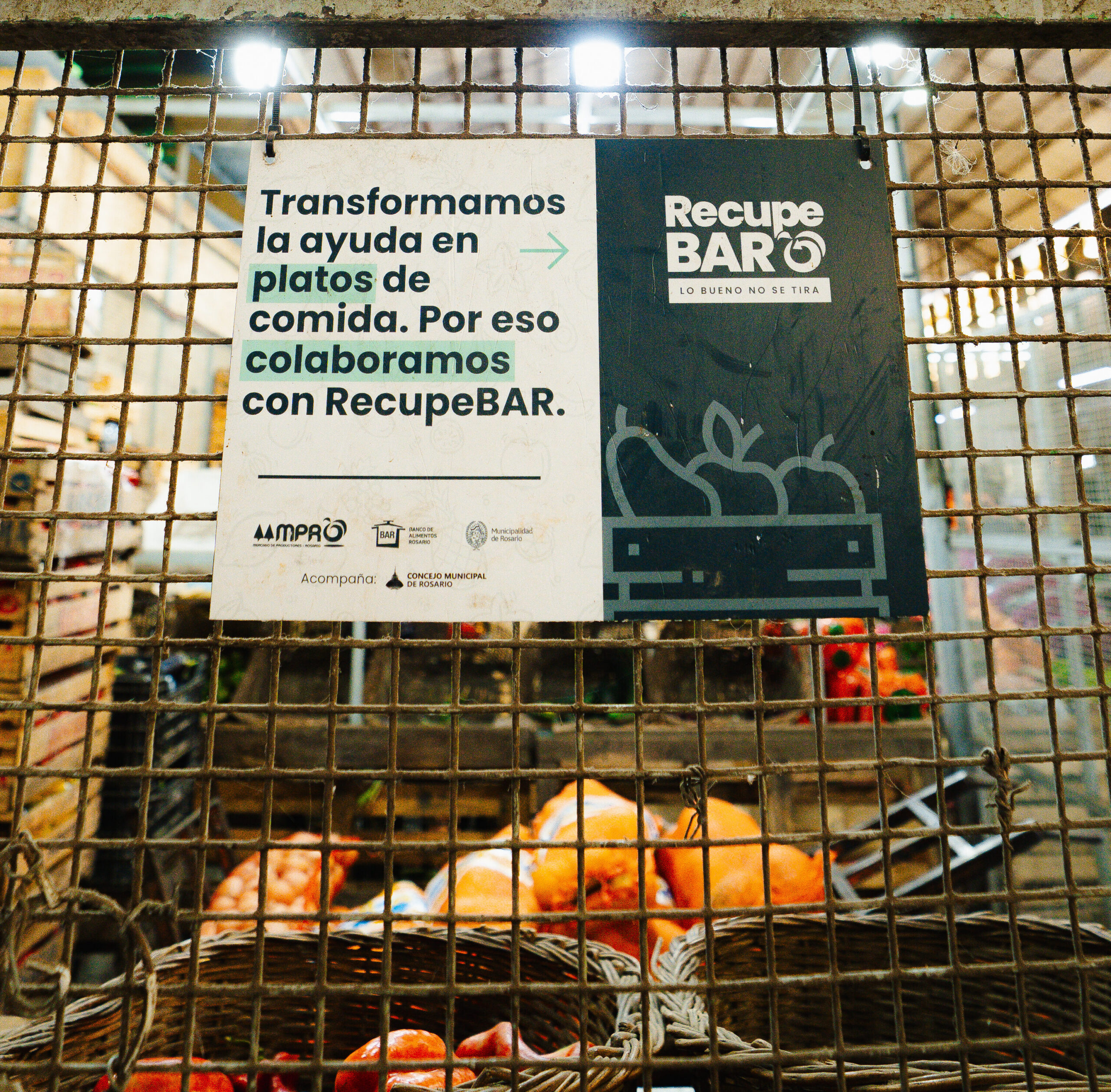
Dans le même temps, vers 2018, la Banco de Alimentos Rosario rencontrait la direction du Mercado de Productores Rosario pour déterminer comment récupérer les produits invendables au lieu qu'ils finissent à la décharge.
Par un heureux hasard, la municipalité, les responsables du Mercado de Productores et la Banque Alimentaire de Rosario ont uni leurs forces. Le marché mettrait à disposition de la banque alimentaire un entrepôt dédié à la récupération des invendus. La municipalité rémunérerait d'anciens récupérateurs de déchets, comme Nico, pour qu'ils collectent les produits frais sur les marchés. La banque alimentaire distribuerait ensuite ces fruits et légumes nutritifs aux personnes souffrant de la faim.
“ Bien sûr, une alimentation adéquate est un besoin fondamental et notre principal objectif ”, déclare Ariel Baez, président de Banco de Alimentos Rosario. “ Mais renforcer le lien social, offrir aux gens des opportunités qu'ils n'auraient pas autrement, est également important, et je pense que c'est ce qui distingue les banques alimentaires. ”
Dès ses premiers jours de travail au marché pour la banque alimentaire, Nico a eu un déclic.
“ Depuis que je suis arrivé chez RecupeBAR, tout est devenu plus clair ”, explique-t-il. “ Maintenant, je ne ramasse plus les déchets à la décharge, je les récupère avant même qu’ils n’y arrivent. Et je le fais pour des familles qui en ont vraiment besoin. ”
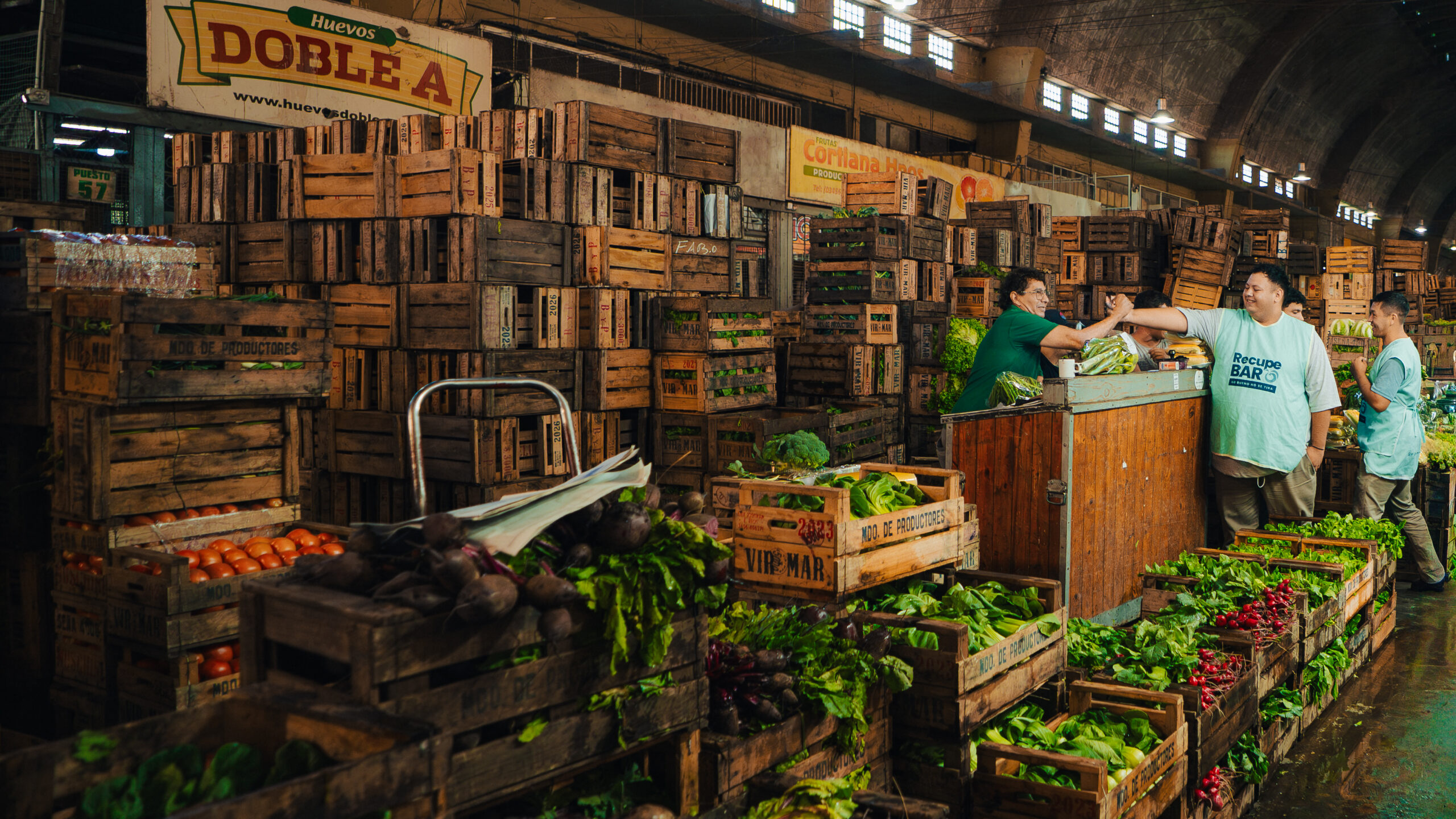
“ Bonjour, monsieur Berti ! ” lance Nico à un vendeur de fruits. “ Vous avez quelque chose pour nous aujourd'hui ? ”
Le vendeur jette un coup d'œil rapide à ses piles et repère deux caisses : l'une contenant des bananes présentant leurs premières taches noires et l'autre des pommes un peu moins brillantes que les autres.
“ Je ne pense pas que quelqu'un va les acheter maintenant, mais ils sont toujours délicieux ”, dit-il.
Nico le remercie d'une poignée de main et charge les fruits sur sa charrette.
Après des années de travail de proximité, RecupeBAR est désormais un acteur incontournable de ce marché dynamique. Ce changement est dû en partie à une action concertée.
“ Ce lien que nous entretenons avec la banque alimentaire et la municipalité nous permet de lutter contre l’énorme quantité de fruits et légumes jetés ”, explique Suleta, la responsable du marché.
Depuis son lancement au Mercado de Productores Rosario en 2018, le programme RecupeBAR s'est étendu à l'autre marché de produits frais de la ville. En huit ans, il a permis de récupérer plus d'un million de kilogrammes de fruits et légumes frais. Aujourd'hui, il emploie 14 personnes qui travaillaient auparavant au noir à la décharge municipale.
Grâce au soutien du Réseau mondial des banques alimentaires et de Bancos de Alimentos Argentina, le réseau national de 20 banques alimentaires, Banco de Alimentos Rosario a pu intensifier la collecte de fruits et légumes frais grâce à de nouveaux camions et une nouvelle installation pour emballer sous vide et congeler les produits frais qu'ils ne peuvent pas livrer immédiatement.
“ RecupeBAR est devenu l’un des piliers de la banque alimentaire ”, déclare Baez.
Sur le quai de chargement du marché, Nico charge des caisses de fruits et légumes dans le camion de la Banque Alimentaire de Rosario, puis quelques énormes pastèques. Il claque les portes du camion et tape sur l'arrière. Le camion entre sur le parking puis se dirige vers l'entrepôt de la banque alimentaire.
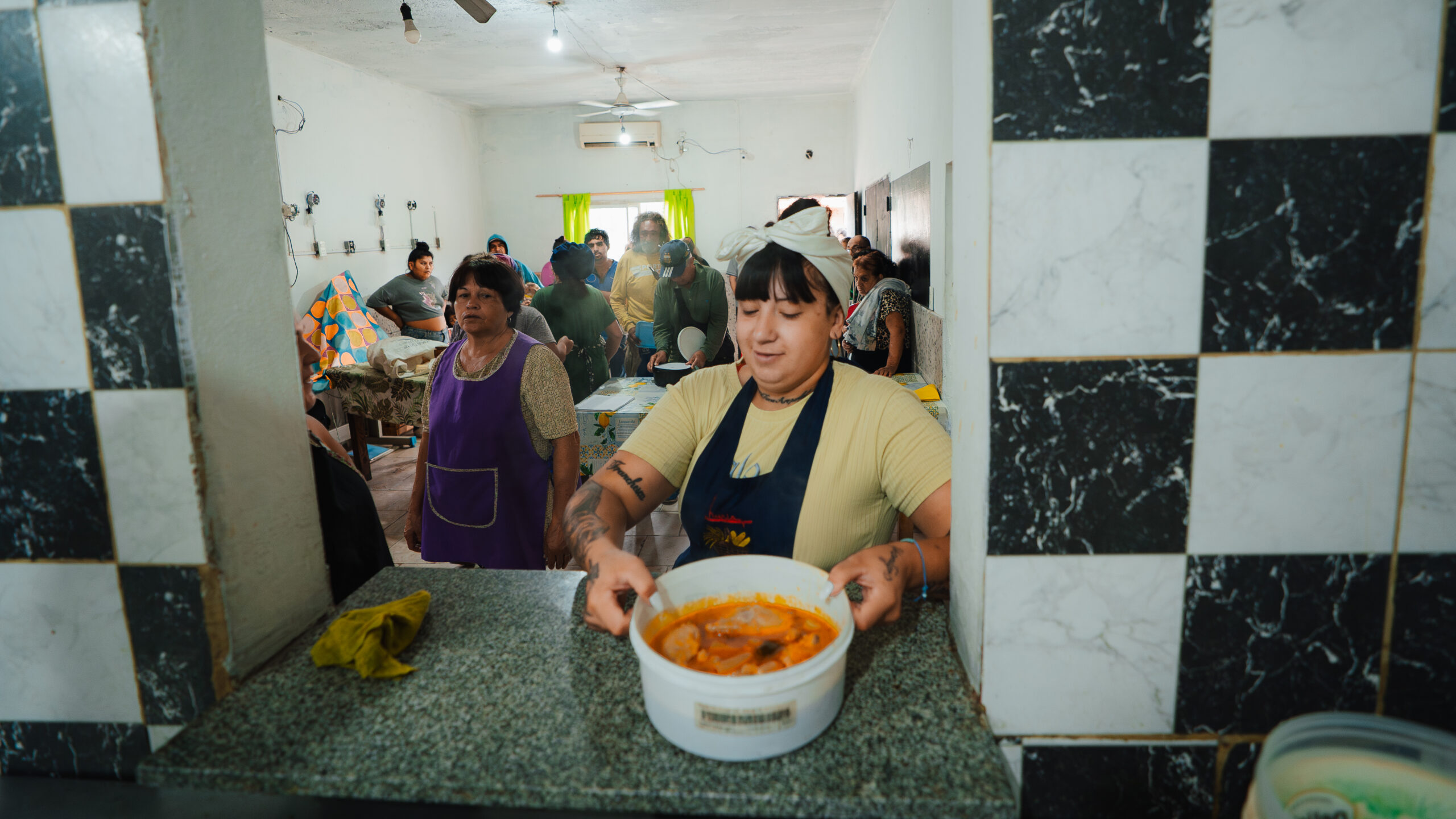
Le lendemain, le long d'un chemin de terre dans un quartier ouvrier de Rosario, les pommes, les bananes, les oranges et les courges que Nico a récupérées au marché sont transportées dans une modeste soupe populaire.
Huit personnes s'affairent à l'intérieur, certaines surveillant trois grandes marmites où mijote un ragoût de poulet et de pommes de terre. D'autres disposent des caisses de fruits frais. Les autres installent des tables pliantes avant le service du midi.
Claudia Medina et plusieurs autres femmes de la communauté nourrissent leurs voisins à la soupe populaire du 9 juillet depuis 2001.
“ Il y a toujours des besoins dans notre communauté ”, dit-elle. “ La banque alimentaire nous fournit la majeure partie de ce que nous servons, notamment les fruits et légumes, qui sont chers pour nous. ”
De retour au marché, Nico et ses collègues Milagros et Micaela prennent la charrette et font un dernier tour. En milieu de journée, l'activité ralentit et la plupart des vendeurs rangent et préparent le marché du lendemain : le moment idéal pour vérifier si quelqu'un envisage de jeter ses invendus à la poubelle.
“ Ce travail me guérit ”, dit Nico. “ J'ai vécu beaucoup de choses dans ma vie, des bonnes et des mauvaises. Mais je me suis souvent senti sans soutien. ”
Les choses ont changé depuis qu'il travaille chez RecupeBAR. Ses deux meilleures amies, Milagros et Micaela, travaillent à ses côtés tous les jours. Toute l'équipe est bienveillante, respectueuse et joueuse.
“ J’ai rencontré ici des amis et des confidents ”, dit-il. “ Les personnes qui m’ont soutenu dans les moments difficiles de ma vie sont ici. Quand j’étais sur le point d’abandonner, elles m’ont convaincu de persévérer. ”
RecupeBAR a apporté à Nico une stabilité qu'il n'aurait jamais imaginée. Il rêve de reprendre ses études pour obtenir un diplôme d'enseignement artistique aux enfants. Il ignore ce que l'avenir lui réserve, mais pour l'instant, il a trouvé un but.
“ Aider les autres me guérit en partie. Si je suis sur Terre pour une chose, c'est bien pour aider les autres. ”